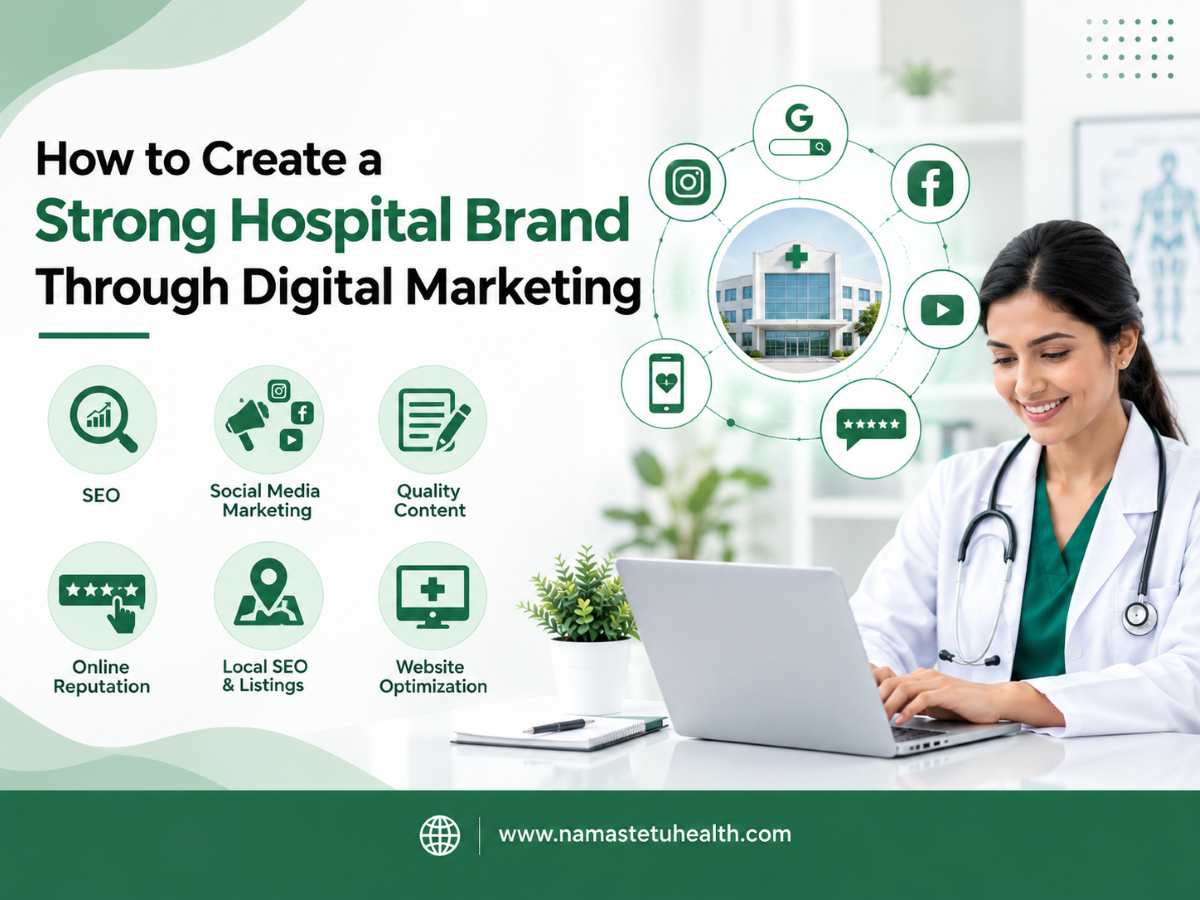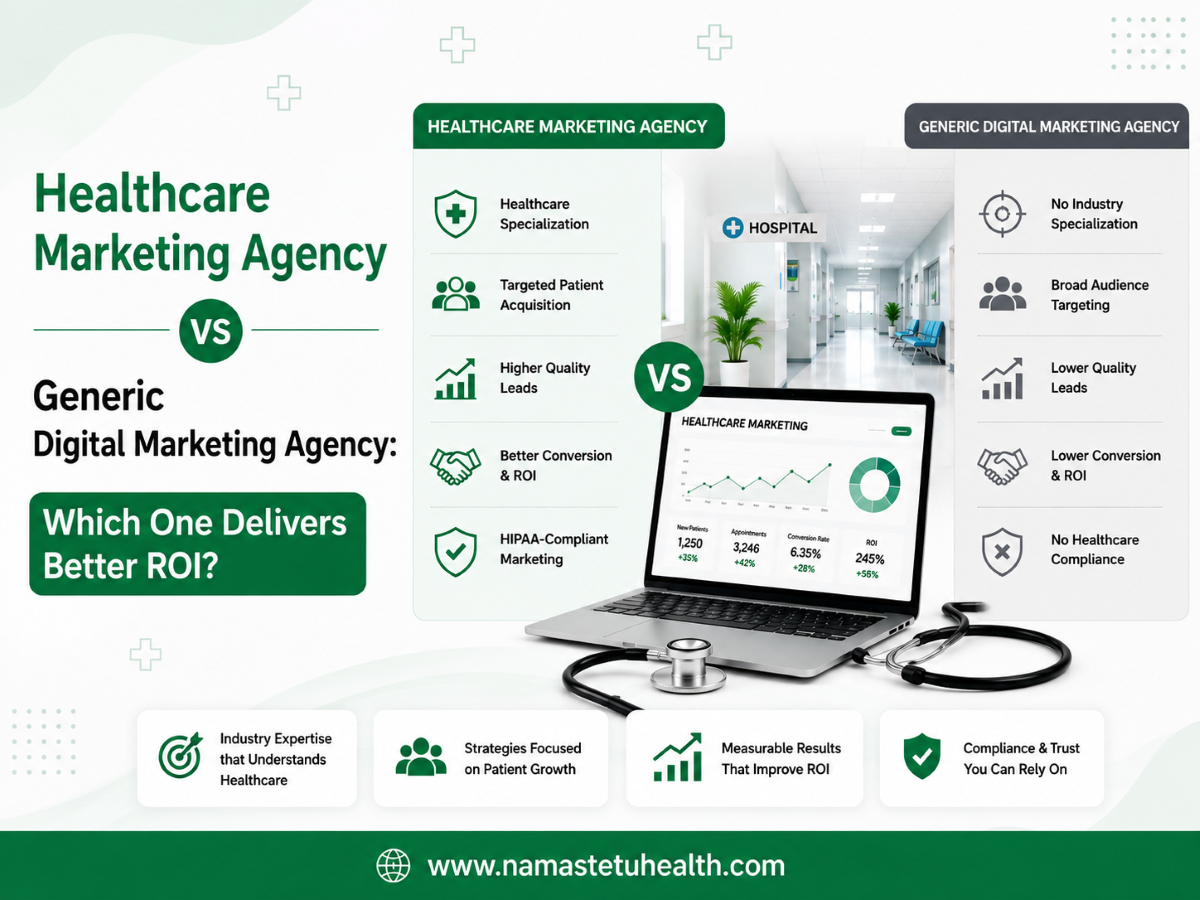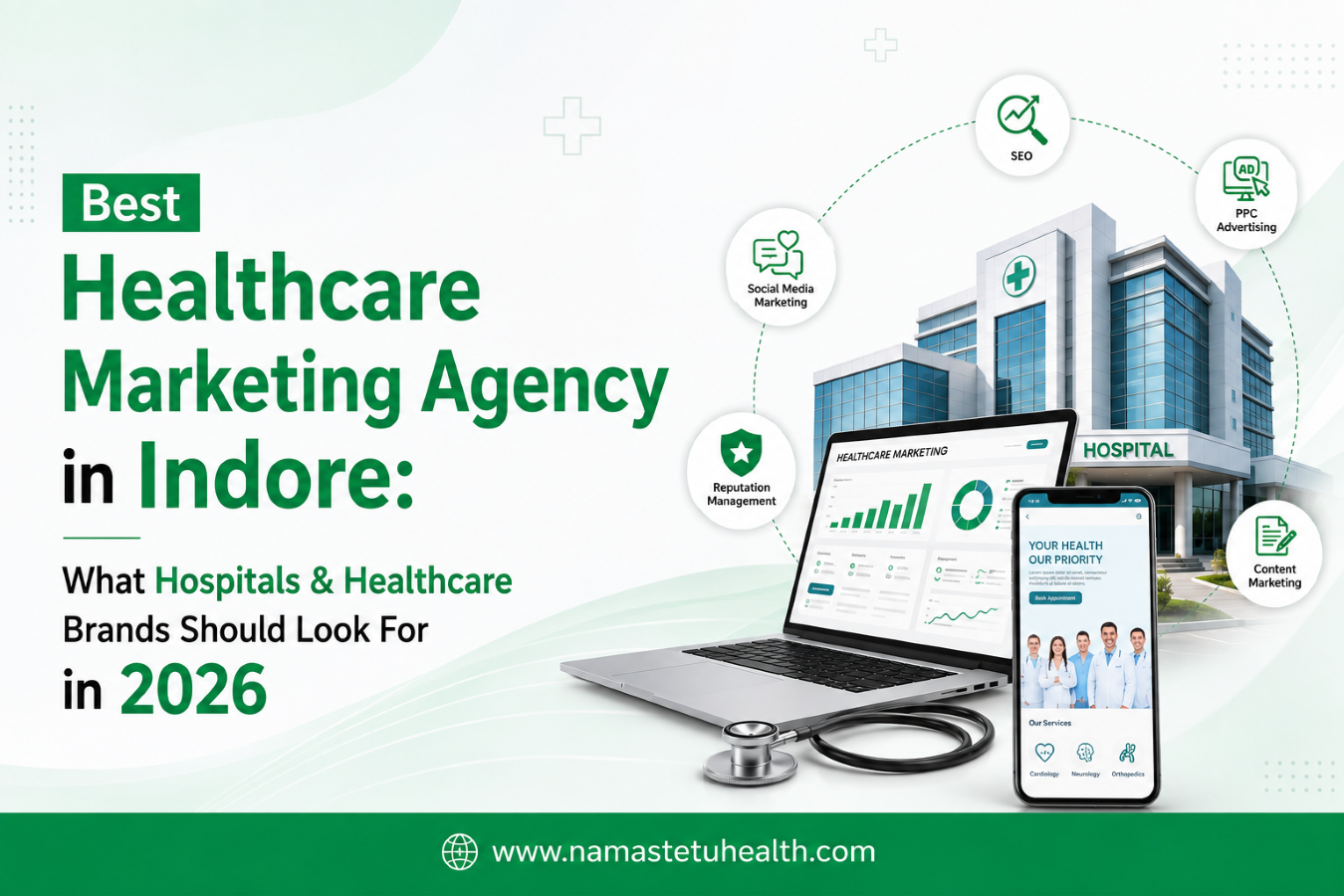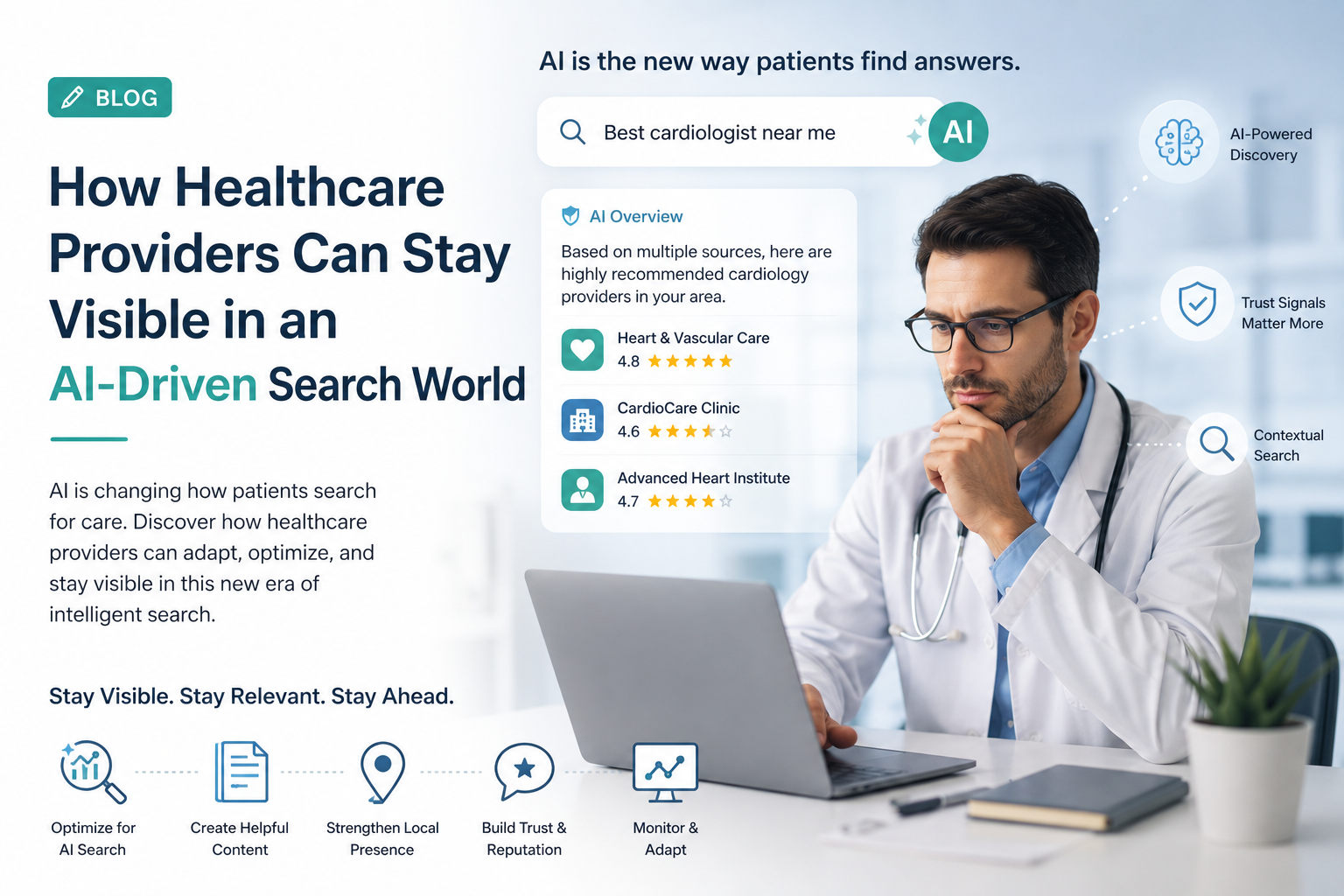
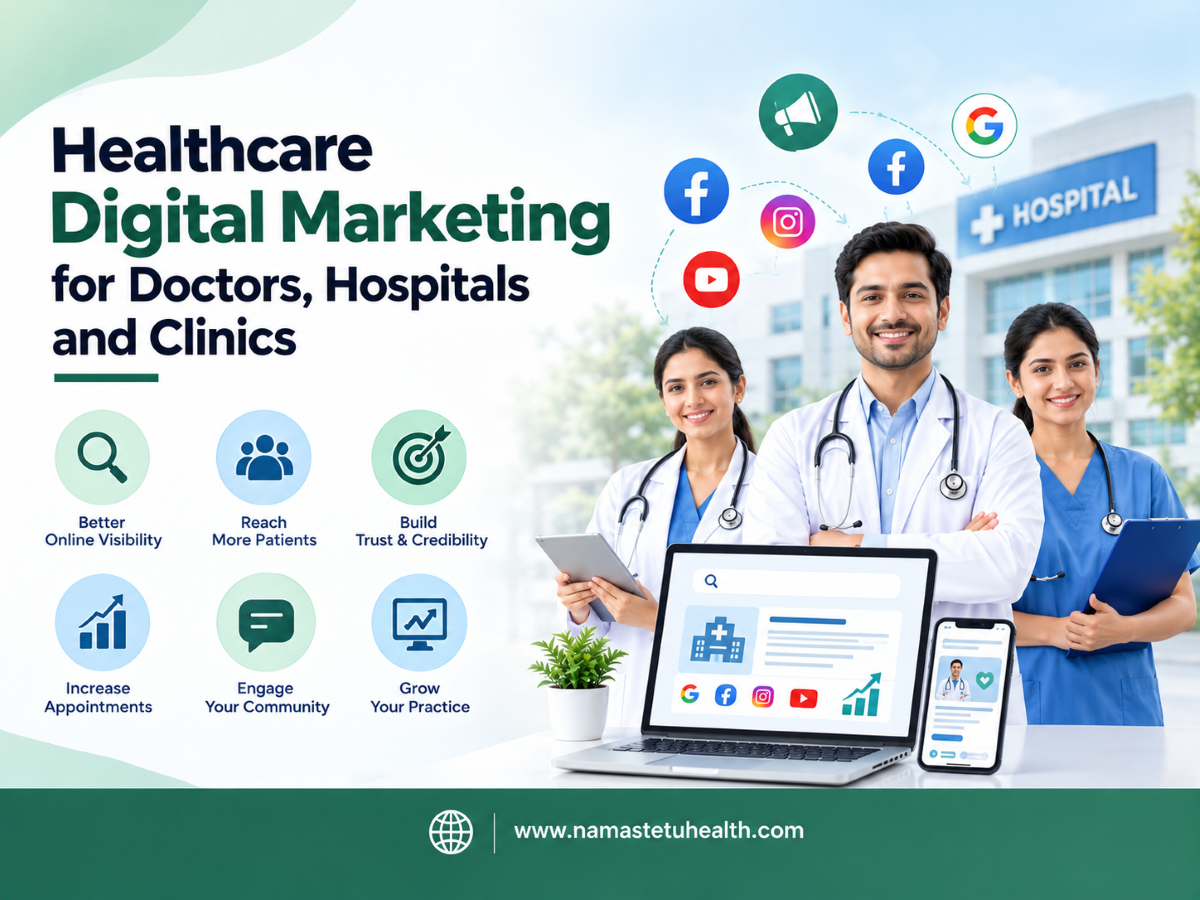
For doctors, hospitals, and clinics, healthcare digital marketing means using online channels such as search, websites, social media, paid ads, reviews, and messaging to help patients find, trust, and book care. Doctors need local visibility and personal trust, clinics need a steady flow of appointments, and hospitals need to promote many departments and treatments at once, so the plan changes for each. Namastetu Health provides Digital Marketing for Healthcare to all three, covering SEO, websites, social media, paid ads, and reputation management.
Healthcare Digital Marketing: The Short Answer
In simple terms, healthcare digital marketing helps patients find and book care online through search, websites, social media, paid ads, and reviews. It works when a provider is visible where patients search, trustworthy in what they read, and easy to book. Results are measured by calls and booked appointments, not likes.
Why Patients Now Start Online
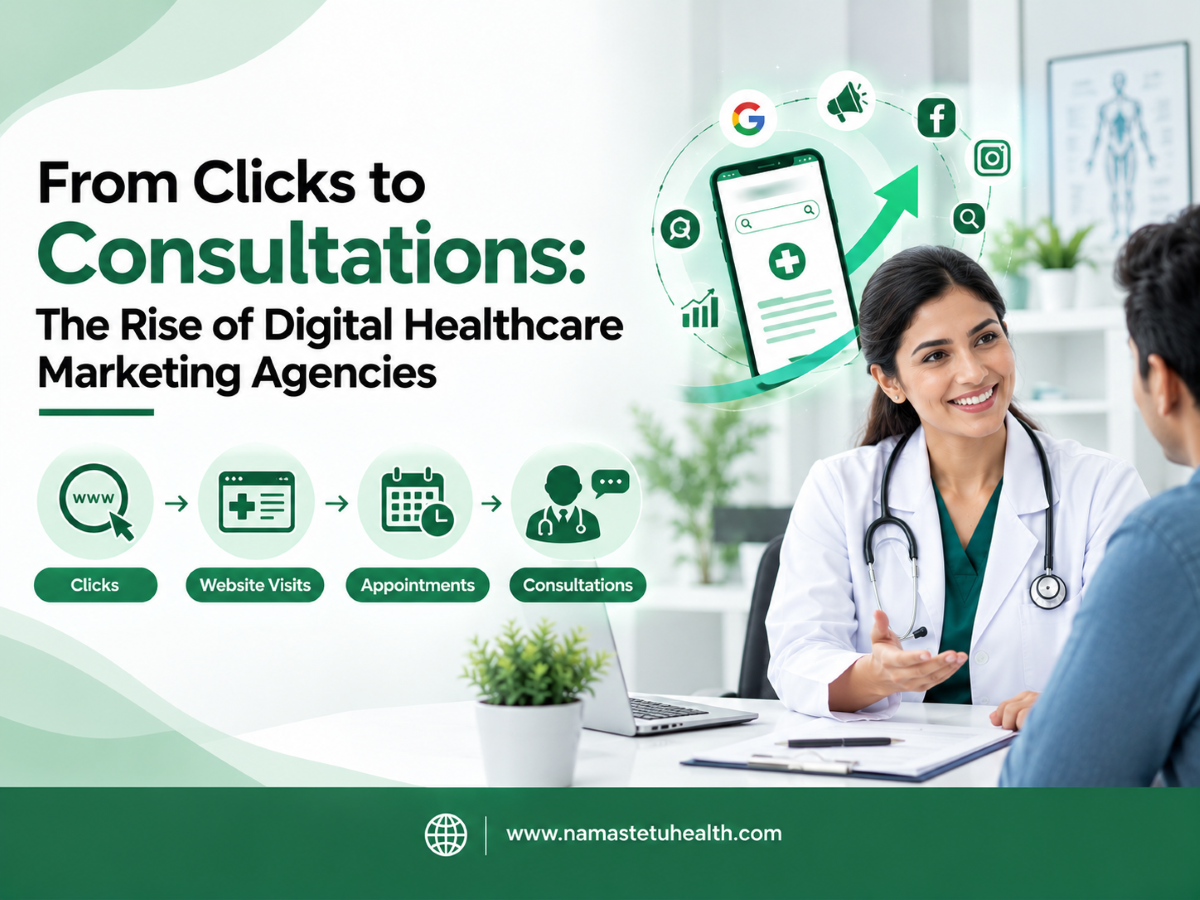
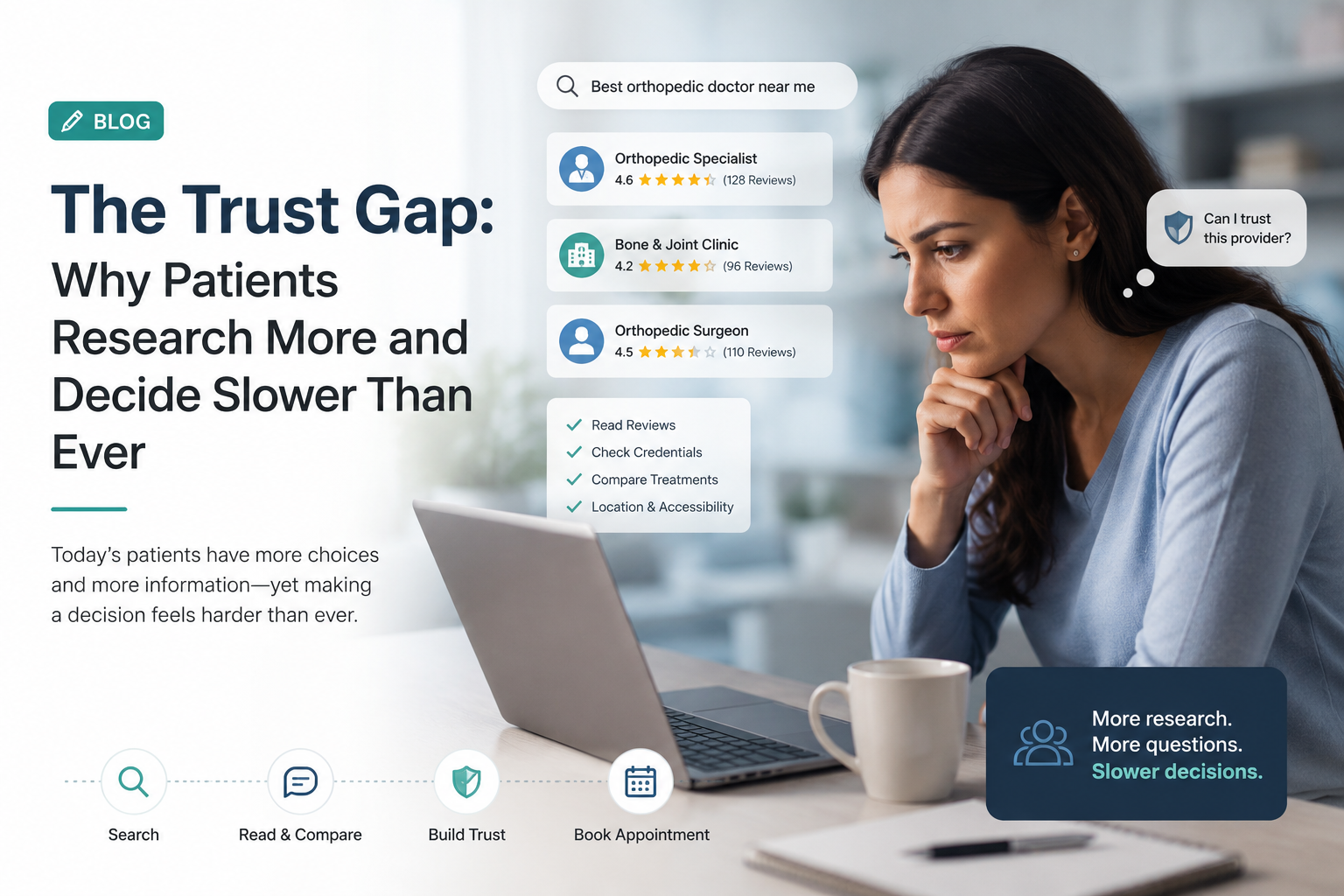
Most patients research online before they contact any provider, so the first impression is made on a screen. The usual journey has five stages:
- Notice a problem and search for the symptom or condition.
- Compare options by reading Google results, doctor profiles, and reviews.
- Check trust signals such as qualifications, photos, and how the clinic replies to reviews.
- Contact the provider by call, WhatsApp, or booking form.
- Visit and review, which feeds the next patient’s research.
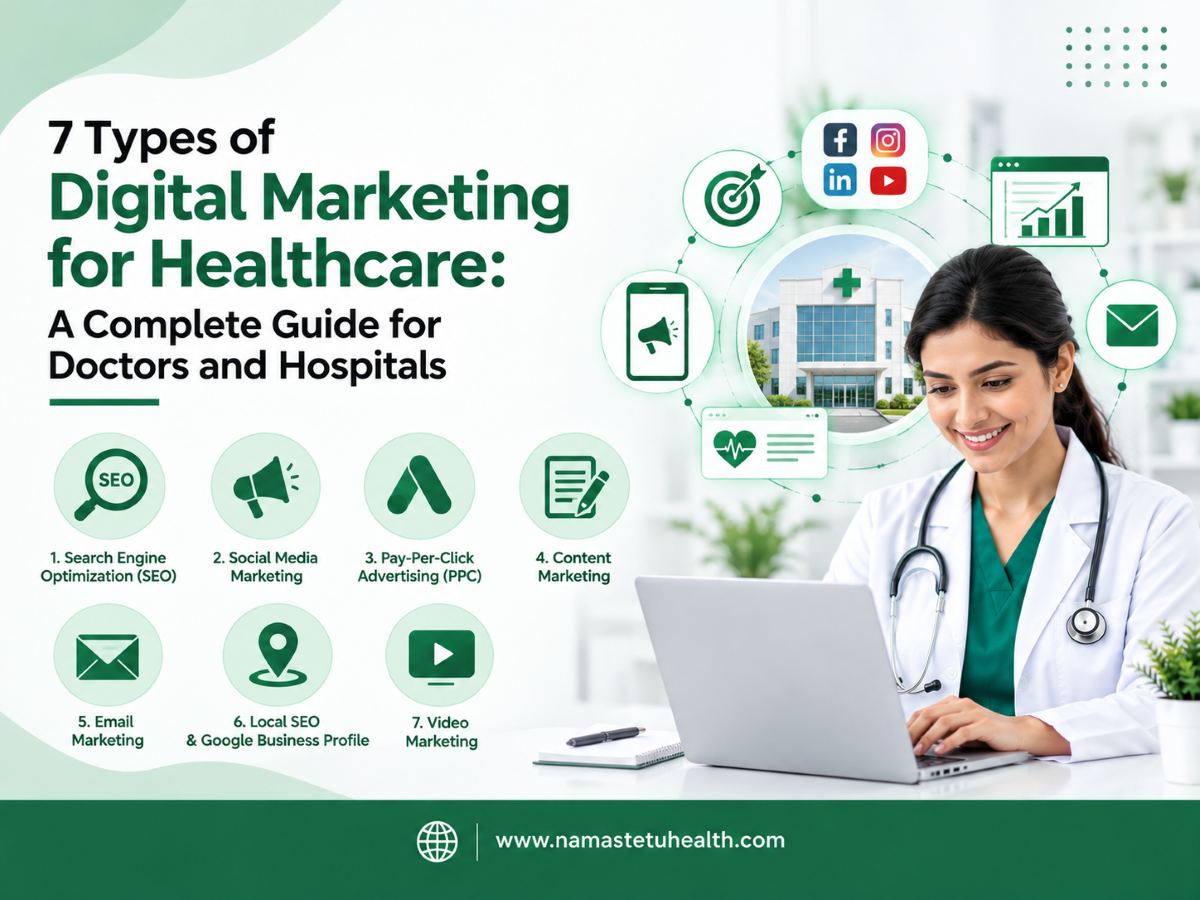
Each channel below supports one or more of these stages.
How the Plan Differs for Doctors, Hospitals, and Clinics
The same channels are used for every provider, but the goal and the first priority change.
| Provider | Main Goal | Focus First | Common Mistake |
| Individual doctor | Be known and trusted by name | Doctor profile, reviews, local search | Relying only on word of mouth |
| Clinic | A steady flow of appointments | Google listing, service pages, reminders | A weak booking path |
| Hospital | Fill many departments and procedures | Department pages, doctor profiles, tracking | Treating every department the same |
Search: Getting Found When Patients Look
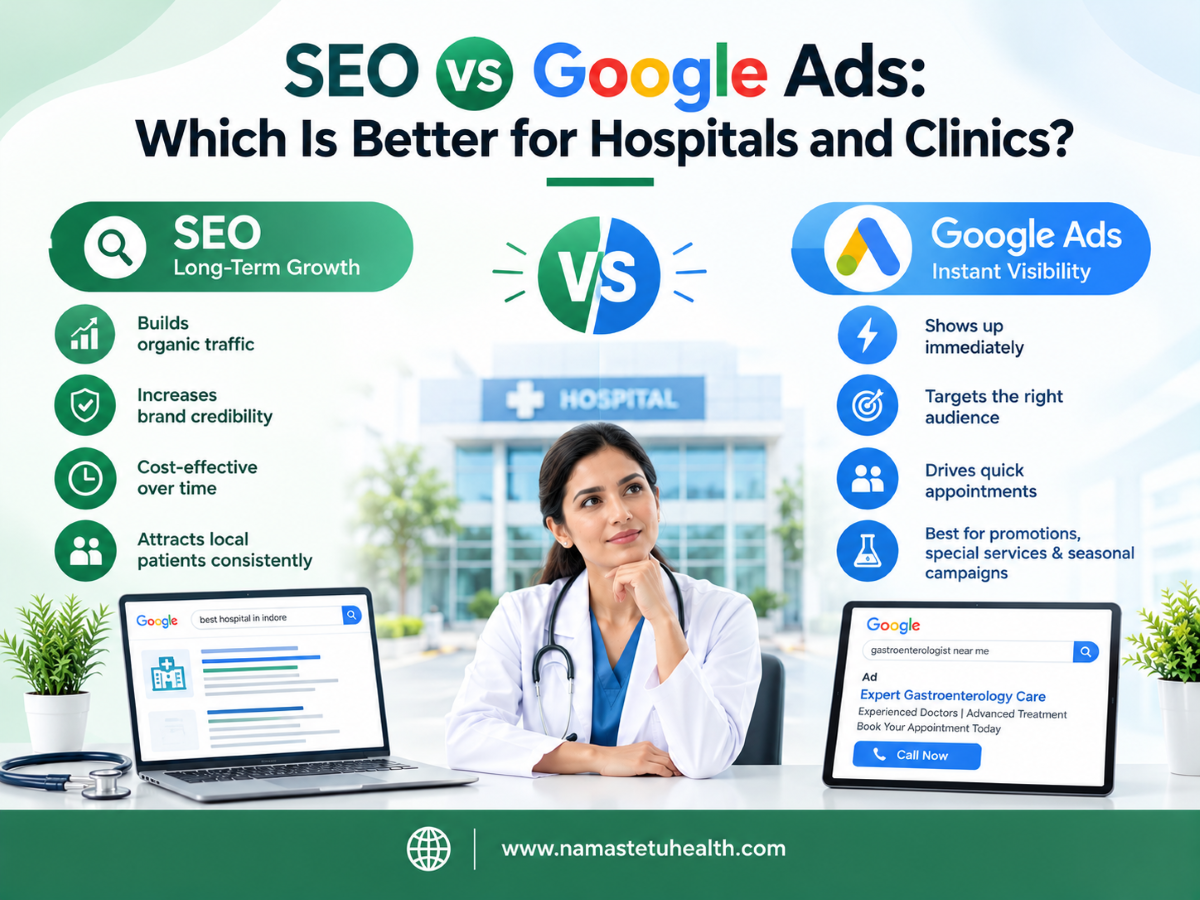
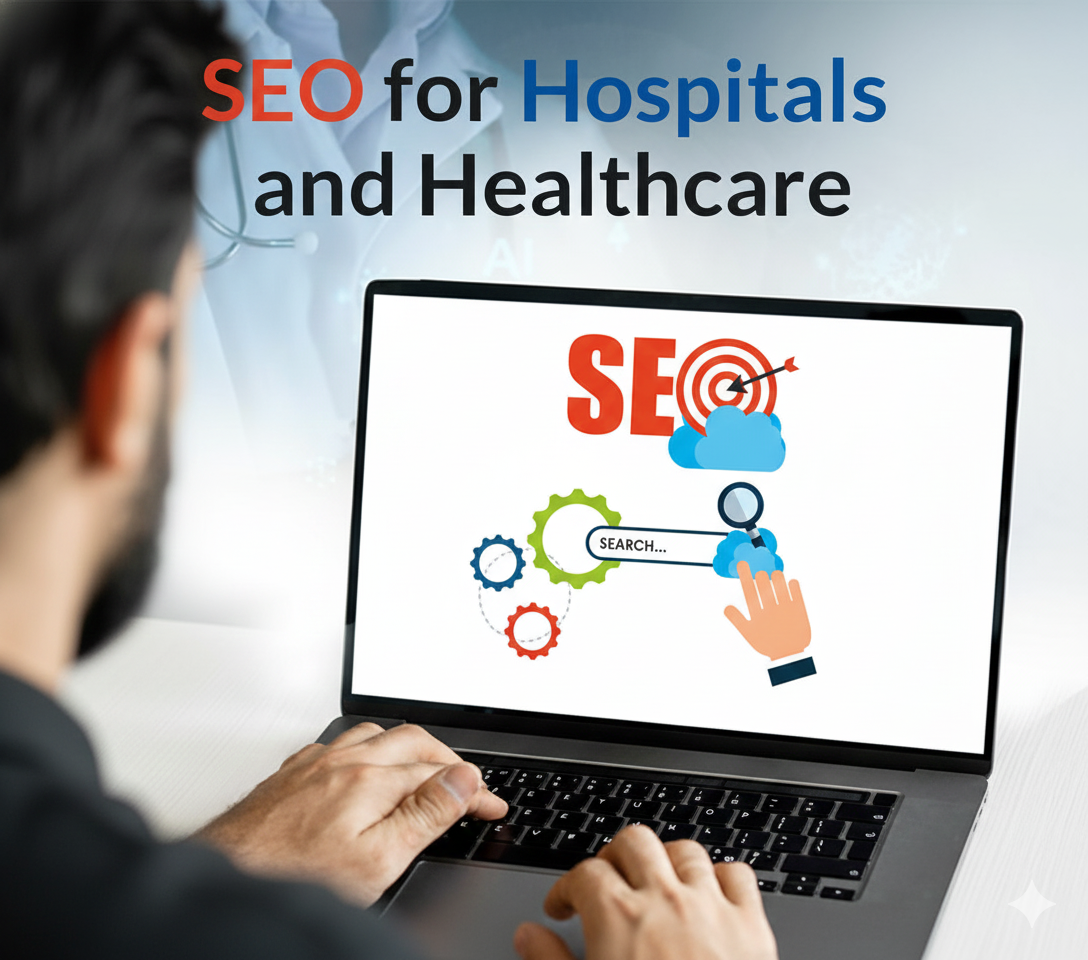
Search brings patients who already want care, and pages that rank keep working without a cost per click. It rests on a complete Google listing, one page for each service, and clear answers to common patient questions.
Practical seo services for healthcare also keep name, address, and phone number identical everywhere, add doctor profiles with qualifications, and update old pages when facts change.
Website and Booking Path: Where Visits Become Appointments
A healthcare website should work as a booking tool on a phone, with the call button, booking form, and doctor details visible immediately. If patients cannot book in a few taps, every other channel loses value.
- Pages that load quickly on mobile data.
- One tap to call or open WhatsApp.
- A short form asking only name, phone number, and service.
- One page per service or department, with the doctor’s name.
Social Media: Building Familiarity and Trust
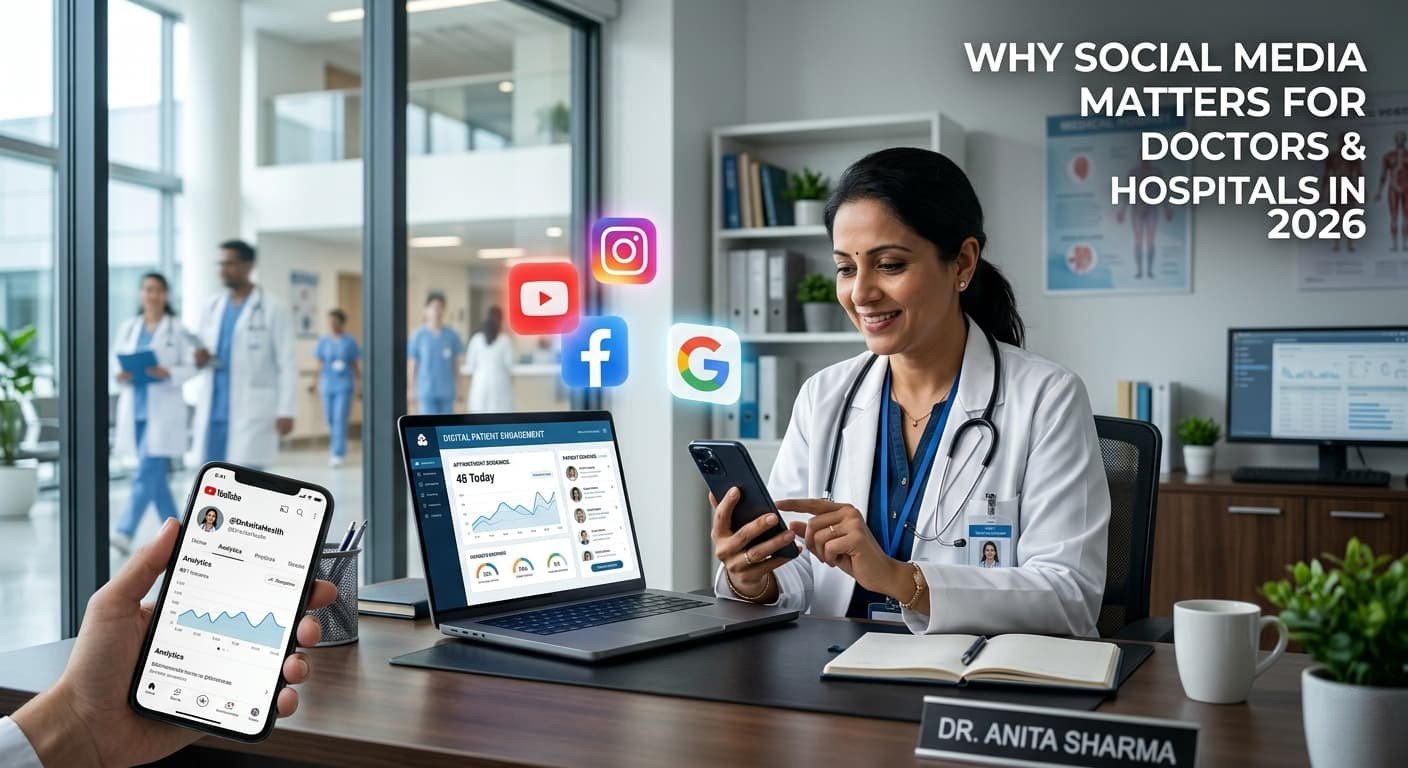
Social media helps patients feel they know the provider before they book. Short doctor-led videos that answer one patient question, clinic introductions, and health tips in plain language work better than promotional posts.
Consistent healthcare social media marketing uses the questions your front desk hears every day as its content list. Get written consent before showing any patient, and avoid before and after claims.
Paid Ads: Visibility When You Need Bookings Sooner
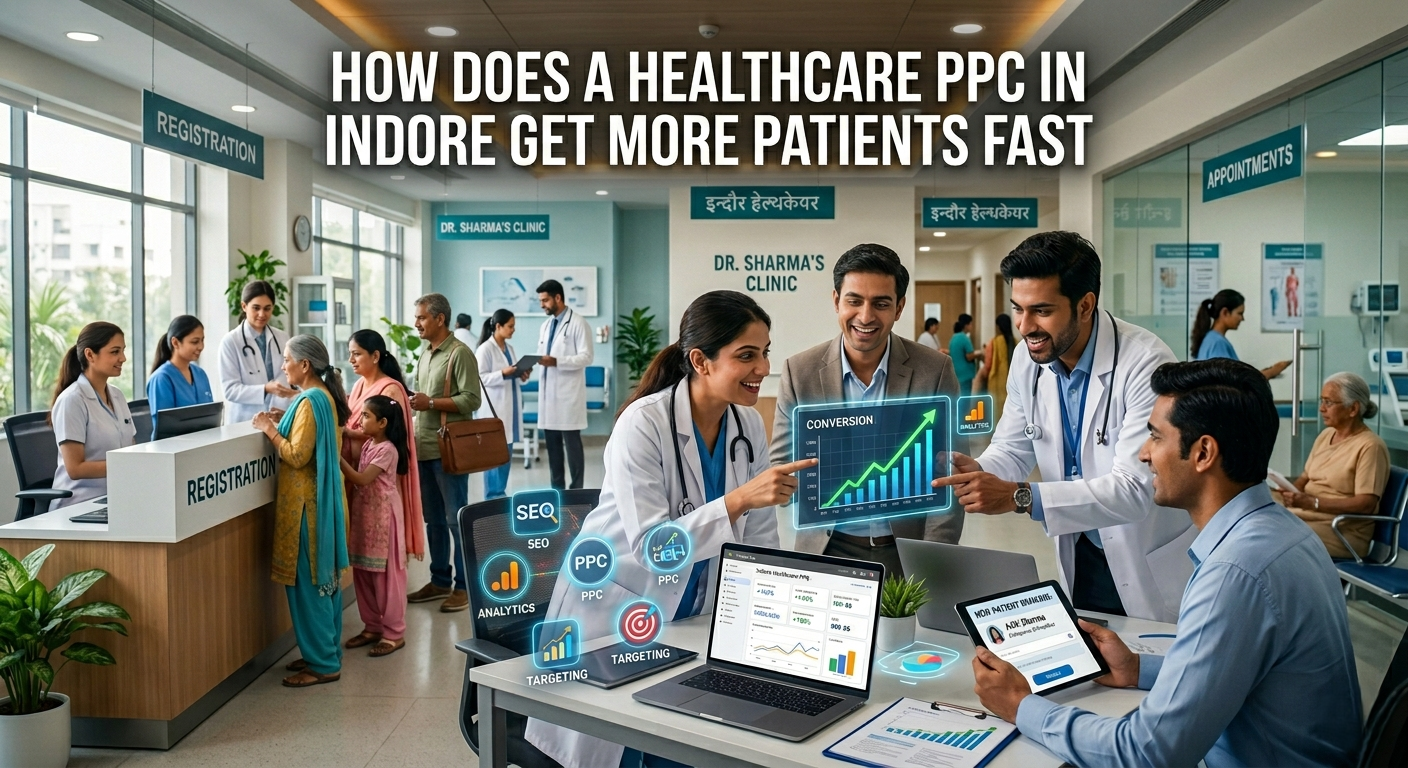
Paid ads place your service in front of patients quickly, and you pay for each click or call. They suit new services, new branches, and slow periods, and they stop the moment the budget stops.
Target the service plus your area, send each click to a matching page, set a daily cap, and block unrelated searches such as “jobs” or “free.” Google also applies stricter rules to healthcare ads, so wording and pages must follow them.
Reviews and Patient Messaging
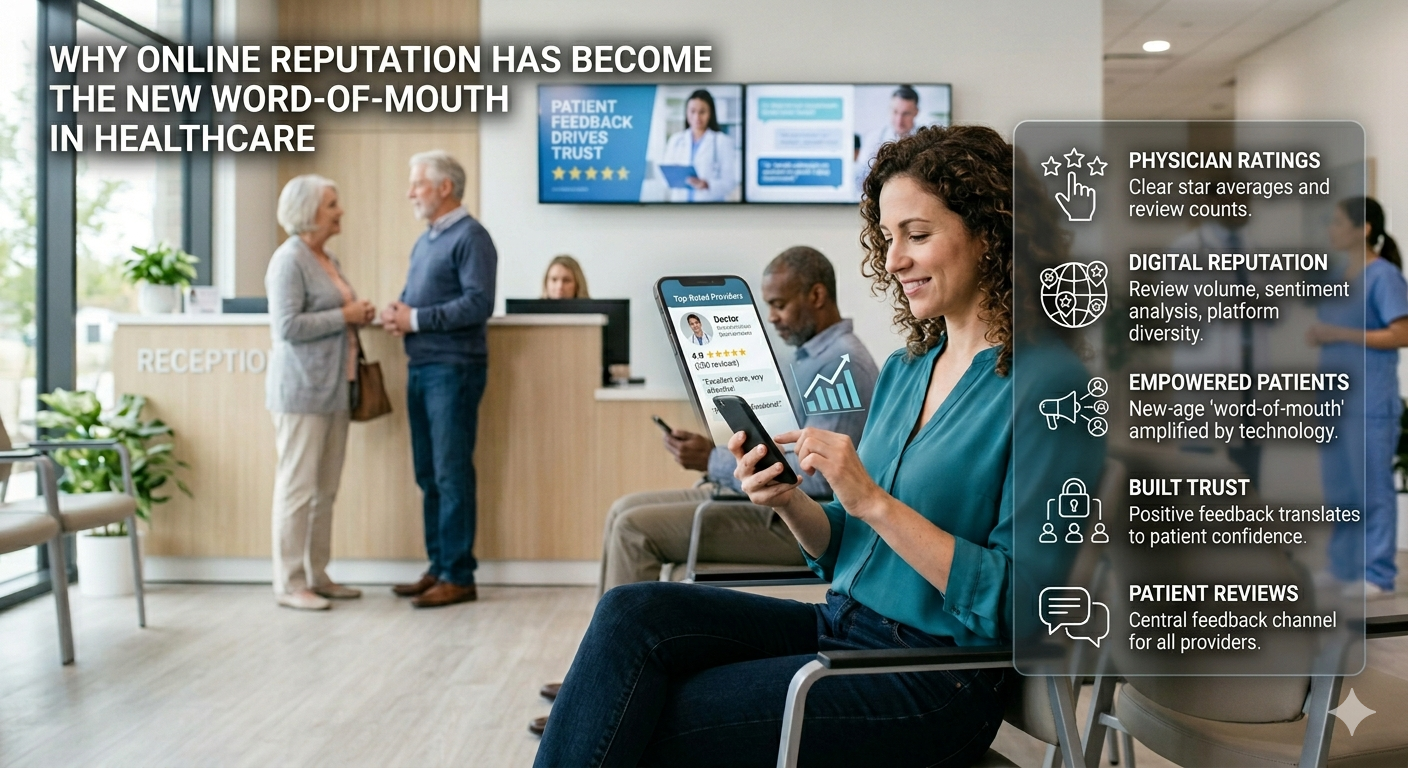
Reviews decide between similar providers, so ask every patient the same way and reply to every review without sharing medical details. Never offer gifts or discounts for reviews.
WhatsApp or SMS reminders and follow-ups, sent only to patients who agreed to receive them, reduce no-shows and bring patients back for follow-up care.
Digital Marketing for Doctors: Build a Name Patients Trust
An individual doctor’s marketing should build a personal name, because patients often choose the person before the place. Start with a detailed profile page, a Google profile that names the doctor, and reviews that mention the doctor’s care.
Strong Digital Marketing for Doctors also adds short videos explaining the conditions the doctor treats most, so patients hear the doctor’s voice before the first visit.
Digital Marketing for Clinics: Keep Appointment Slots Full
A clinic needs a steady flow of appointments, so its marketing should start from open slots. Count the free new-patient slots each week, promote the services that have room, and keep a cap on ads.
Practical Digital Marketing for clinics in indore focuses on the Google listing, service pages, reviews, and reminders, since these decide who books nearby.
Digital Marketing for Hospitals: Promote Departments and Procedures
A hospital has many services, so each department and major procedure needs its own page, doctor profiles, and clear information on insurance and cashless treatment. Patients also take longer to decide, so track each enquiry through to treatment.
Complete Digital Marketing for Hospitals also separates emergency pages from planned-care pages, and gives each branch its own accurate Google listing.
Measuring Healthcare Digital Marketing Results
Measure what patients do, not what they see. Track calls from your Google listing, booked appointments, cost of each booked appointment, attendance, and new reviews.
Give each channel its own phone number or tracking link, and ask every new patient how they found you. Without this, you cannot tell which channel to fund. Review the numbers regularly and change one thing at a time, so you can see what caused each result.
Mistakes That Waste Budget
- Spending on ads before the website can take bookings.
- Counting likes instead of calls and appointments.
- Ignoring reviews and missed calls.
- Posting inconsistently, then stopping.
- Using one plan for a doctor, a clinic, and a hospital.
Choosing a Partner
Choose a partner who has healthcare experience, has a doctor review medical content, tracks calls and bookings, and reports in plain words. Be careful with anyone who guarantees rankings, since no one controls search results.
Ask these questions before you sign:
- Can you show results from other healthcare clients?
- Who reviews the medical content before it is published?
- How do you track calls and WhatsApp enquiries?
- Who owns the website, listings, and ad accounts if we stop working together?
Common Questions Providers Ask Before Starting
1. Is digital marketing different for doctors, clinics, and hospitals?
Yes. Doctors build a personal name, clinics fill appointment slots, and hospitals promote many departments, so the first priority differs for each.
2. Which channel should I start with?
Start with a complete Google listing and a website that takes bookings easily, then add one channel at a time.
3. Do I need every channel?
No. Choose channels based on your goals and capacity, and add more only after the earlier ones work.
4. How do I know it is working?
Look at calls, booked appointments, cost per booked appointment, attendance, and reviews, not likes or page views.
5. Can doctors advertise online?
Rules differ and change, so check your medical council’s guidelines first. Accurate profiles and educational content are generally the safest approach.
Conclusion
Every provider needs to be found, trusted, and easy to book, but the order of work depends on whether you are a doctor, a clinic, or a hospital. Done in the right order and tracked by real patient actions, healthcare digital marketing becomes a steady source of appointments rather than a cost. Namastetu Health works with all three provider types to build exactly that.
Contact Namastetu Health and tell us whether you run a practice, a clinic, or a hospital, and we will outline which channels to start with and what to track.