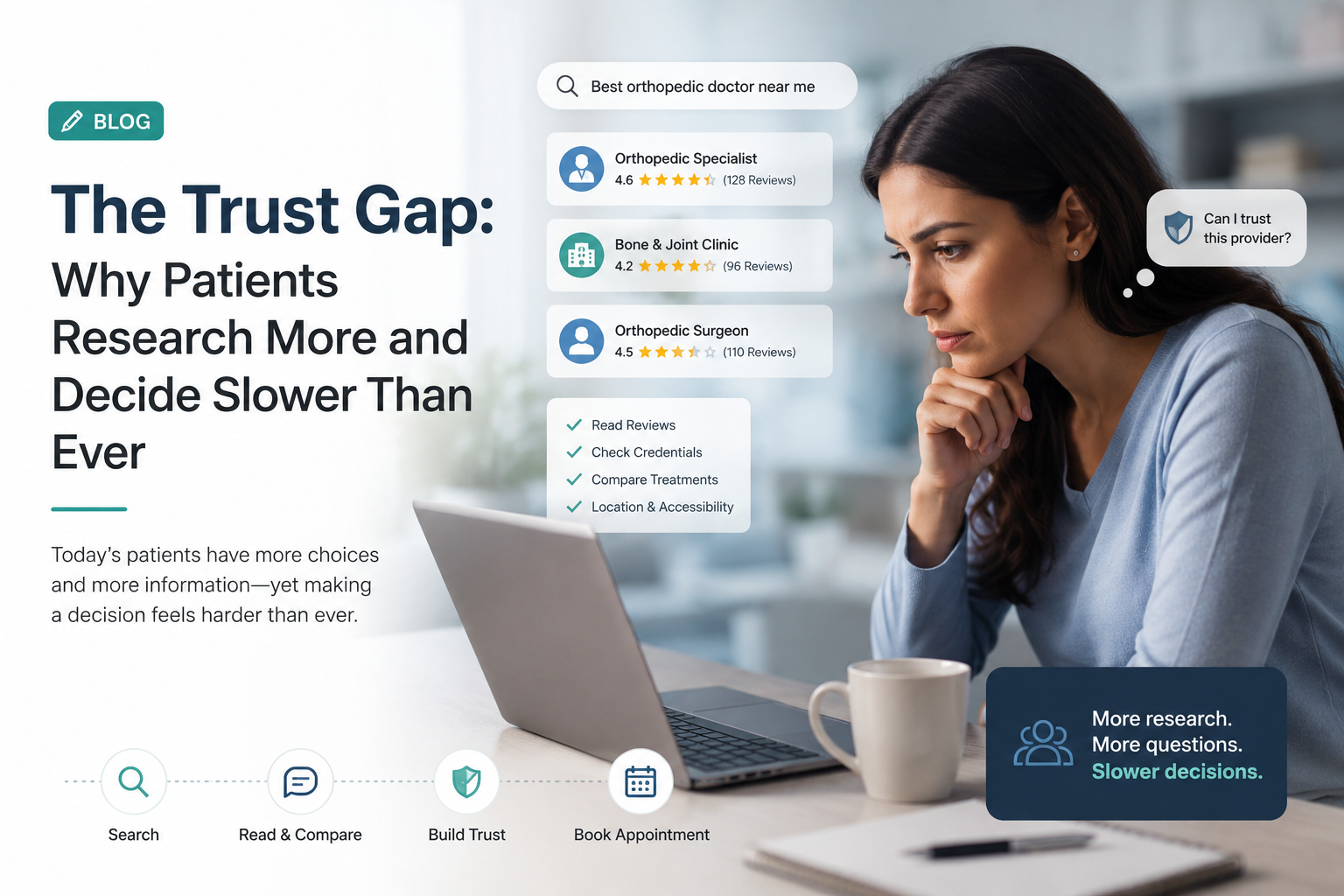
Compared to the previous ten years, the last two years have seen a greater shift in how patients locate healthcare providers.
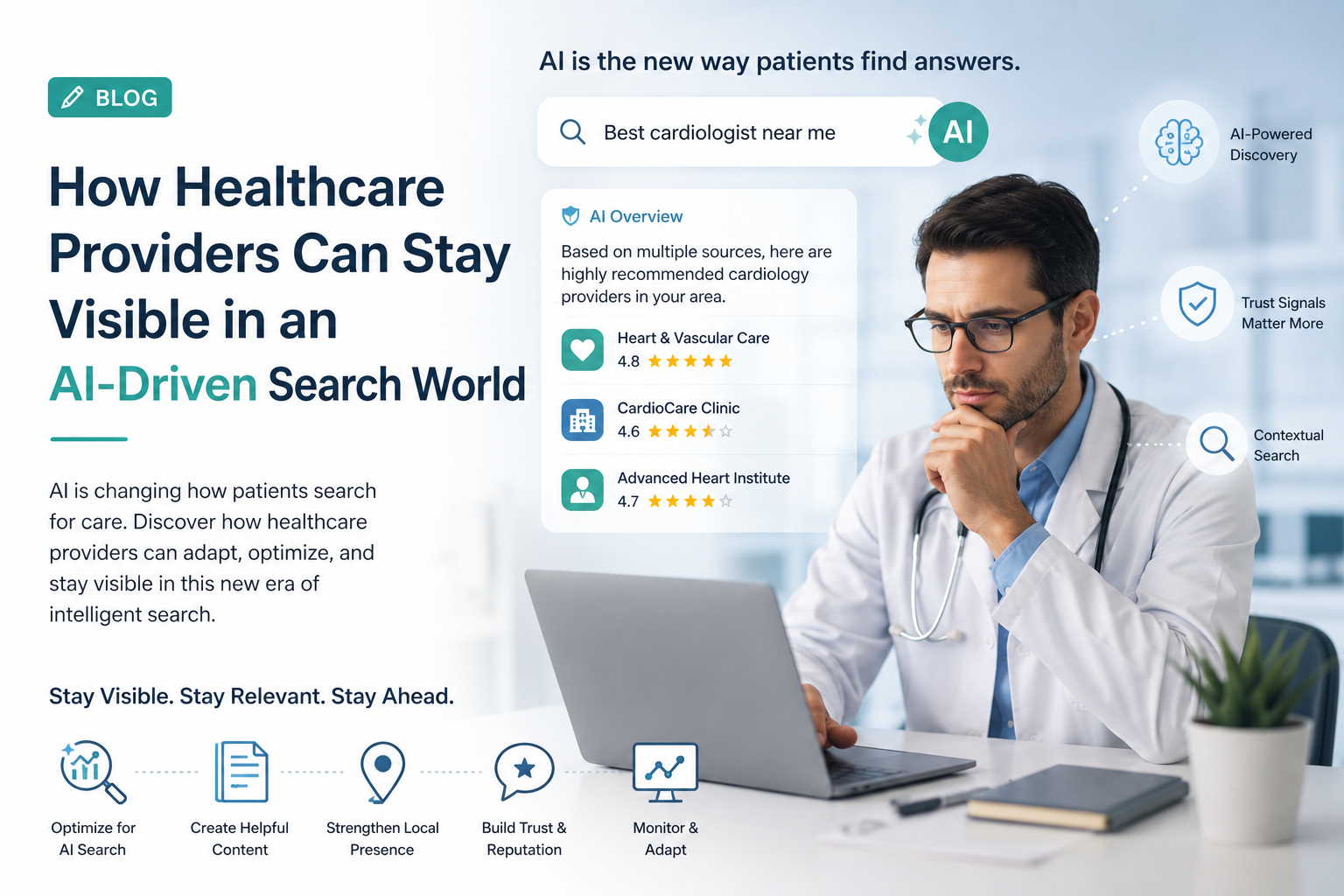
The goal used to be to rank on Google’s first page for the appropriate keywords. That objective is still important, but it is no longer the entire picture. In addition to searching Google, patients now ask ChatGPT which cardiologist in their area is worthwhile. Perplexity is used to determine which symptoms call for an orthopedic visit. They come upon Google’s AI Overviews, which respond to their inquiries without requiring them to visit a website.
According to National Institutes of Health data, Nearly 70% of patients start their healthcare journey online. What that research could not foresee at the time of writing is how significantly the character of that online experience would change once AI tools integrated into daily search habits.
For healthcare providers, this transition presents both a challenge and a genuine chance. The danger lies in being unseen: methods that were performing adequately in conventional search might struggle to maintain their position without grasping the reasons. The chance is available for any clinic or hospital ready to adjust now, ahead of their rivals.
At Namastetu Health, we assist healthcare providers in managing this transition. Here’s what you should understand about maintaining visibility as AI transforms the search environment.
Understanding the New Search Landscape
Prior to implementing strategies, it is helpful to comprehend what has truly changed.
For about 40% of health-related search queries, Google now produces AI-powered summaries known as AI Overviews. Before consumers see any conventional links, these show at the top of results pages, offering an immediate response. These summaries provide patients with the information they require for numerous searches without requiring them to click on a single result.
This does not imply that organic rankings are meaningless. It indicates that the threshold has been raised for both traditional results and summaries produced by AI. Practices with reliable, well-structured, expert-attributed content are being acknowledged and surfaced across several channels, while those that provide thin, generic content or rely on antiquated keyword techniques are being screened out.
The strategies succeeding in AI-powered search currently are implementing the same basic principles that effective SEO has historically required, only with enhanced accuracy and uniformity.
1. Build the Credibility Signals That AI Actually Trusts
Google has traditionally classified healthcare content under a term known as YMYL, which stands for Your Money or Your Life. This categorization implies that health information is subject to a more rigorous standard since inaccurate data in this area can directly endanger individuals. The structure employed to assess that standard is referred to as E-E-A-T: Experience, Expertise, Authoritativeness, and Trustworthiness.
In 2026, E-E-A-T is a mandatory enhancement goal. It serves as the foundation. Content lacking these qualities will not rank for competitive healthcare keywords and will be excluded from AI responses.
For healthcare professionals, this translates into a number of tangible aspects:
- All clinical content on the site must be credited to a specific, qualified doctor or specialist and should not be published without identification.
- Physician biographies ought to encompass credentials, years of practice, fields of expertise, and ideally connections to relevant professional organizations or published research.
- The site must feature a distinct “About Us” section, a privacy policy, and open details regarding the clinic’s qualifications and associations.
- Content must be periodically assessed and revised, with the date of the most recent review displayed on the page.
These signals assist both Google and AI platforms in recognizing that your practice is an authentic, expert resource deserving of citation.
2. Make Healthcare Content Marketing Do Real Work
Content is still the engine of visibility, but the type of content that earns rankings in 2026 looks different from what worked even three years ago.
Patients are not searching for generic health articles. They are asking specific questions: “What happens during a laparoscopic cholecystectomy?” “How long does recovery take after knee replacement surgery?” “When should I see a cardiologist for chest tightness?” They want direct, clear answers from sources they can trust.
Content remains the driving force behind visibility, yet the style of content that achieves rankings in 2026 differs from what was effective just three years prior.
Patients are not looking for standard health articles. They are inquiring about particular details: “What happens during a laparoscopic cholecystectomy?” is one of the specific questions they are posing. “After knee replacement surgery, how long does recuperation take?” “When should I consult a cardiologist if I have tightness in my chest?” They want clear, concise responses from reliable sources.
Effective healthcare content marketing in this context signifies:
- Developing specialized condition and procedure pages that thoroughly explore a specific subject instead of superficial blog articles that address multiple topics briefly.
- Creating content that reflects genuine patient inquiries, as the closer a page addresses the specific question a patient poses, the higher the chances it has to feature in AI-generated summaries.
- Arranging content using distinct headings, bullet points, and brief responses that AI tools can identify and display directly.
- Incorporating FAQ sections into all key service and condition pages, structured for search engines and AI to interpret them as direct responses.
One aspect that distinguishes top-quality healthcare content from others is its specificity. A page named “Joint Replacement Surgery at Our Clinic” detailing the procedure, preparation, recovery timeline, anticipated outcomes, and common questions will consistently perform better than five individual brief blog entries on loosely connected subjects. AI seeks depth and structure when determining what to reference.
At Namastetu Health, our strategy for healthcare content marketing is fully centered on this philosophy. We don’t create content just to occupy a blog schedule. We create content that achieves high rankings, addresses patient inquiries, and establishes clinical credibility that grows progressively.
3. Make Local SEO the Foundation, Not an Afterthought
In many healthcare practices, the patients most likely to schedule an appointment are those who live nearby and are looking for particular care. This positions local SEO for healthcare as the top-performing channel in the entire digital marketing landscape.
Nevertheless, many businesses fail to allocate enough resources to it, frequently because local SEO appears less thrilling than content or paid advertising. That is an expensive error.
This is how fully effective local SEO for a healthcare practice appears in 2026:
Google Business Profile optimisation:
- Main and subcategories that align with your specific expertise
- A comprehensive service list featuring explanations for each option.
- Recent images of the clinic, staff, and amenities
- Consistent updates (news, wellness advice, new offerings) to ensure profile engagement.
- A uniform approach to handling all incoming reviews
Directory consistency:
- Same name, address, and phone number consistently across Google, Justdial, Practo, Healthgrades, and any other directory listing your practice.
- Discrepancies among these platforms confuse search algorithms and diminish trust in your listing.
Location-specific content:
- Service pages that mention your city and area organically, without overloading on keywords, but in a manner that genuinely reflects whom you assist and where.
- If you operate several locations, each one should possess its own page featuring distinct content instead of identical versions with merely the location name altered.
Reviews as a local ranking signal:
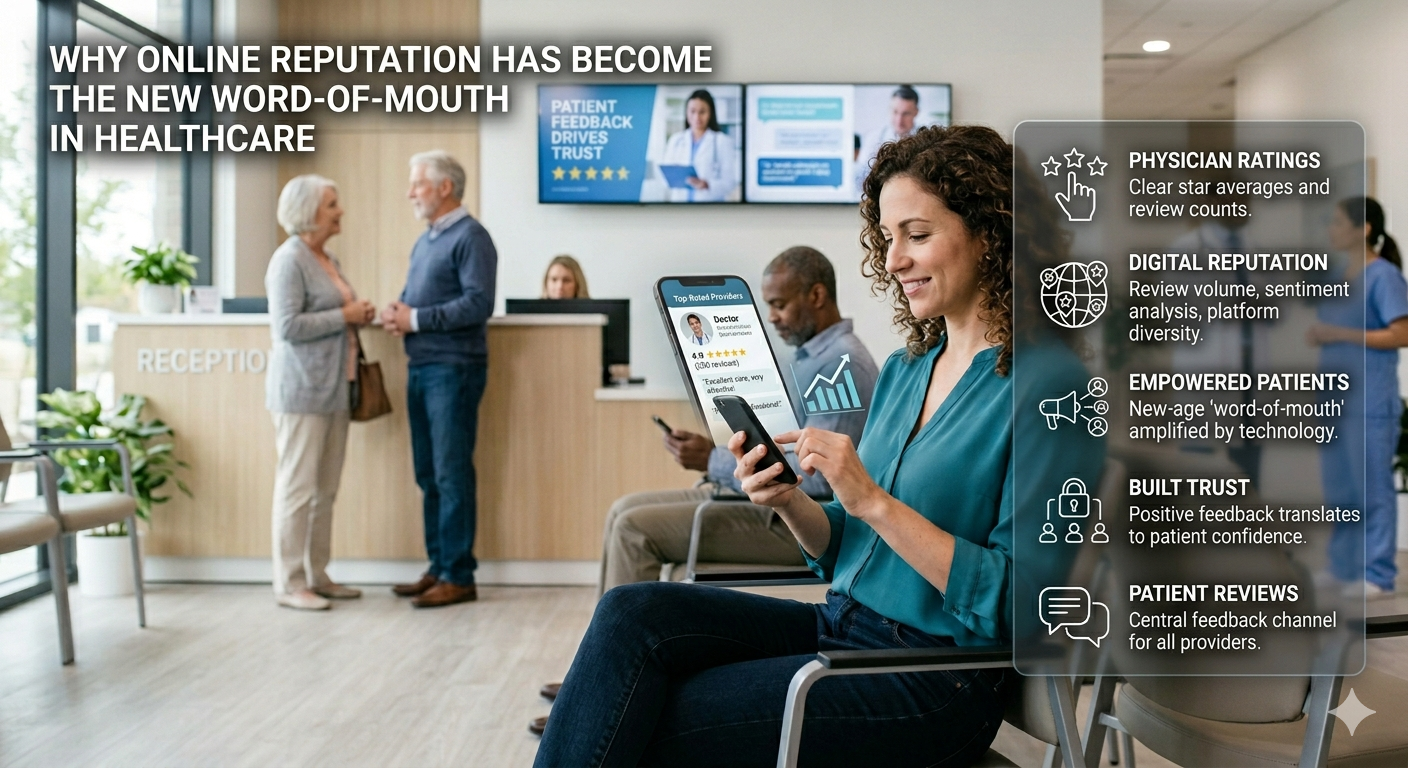
- Google’s local ranking algorithm looks at review activity, recency, and response rate as crucial trust signals. In fact, patient reviews can significantly influence healthcare practice growth by improving both local search visibility and patient confidence.
- A practice that consistently creates new reviews and answers to all of them will outrank a competition with more overall reviews but a pattern of quiet.
4. Sort Out the Technical Foundations That AI Penalises
You may create outstanding content and spend significantly on marketing, but if your website is sluggish, hard to navigate on mobile, or has technical issues, a lot of that work is lost. In a search environment powered by AI, technical performance is not merely an SEO factor—it directly impacts visibility, patient experience, and conversion rates.
Professional healthcare website development services cover many of these key areas, ensuring that your website meets both search engine standards and patient expectations.
- Page speed: Pages that load in less than two seconds have better conversion rates and more consistent rankings. Regularly test using tools such as Google PageSpeed Insights and emphasize mobile speed.
- Mobile experience: More than 60% of health-related searches occur on mobile devices. A website that functions well on desktop but causes frustration on mobile is undetectable to much of your potential patient audience.
- Structured data (schema markup): Implementing schema for MedicalOrganization, Physician, MedicalCondition, and FAQPage aids search engines and AI tools in accurately grasping the content of your material and enhances the chances of appearing in rich results.
- HTTPS security: An essential trust indicator that is indispensable for any healthcare site gathering patient inquiries.
These are not glamorous improvements, but they form the technical layer that determines whether your content investment actually reaches the right people.
5. Invest in Healthcare SEO Services That Understand the Sector
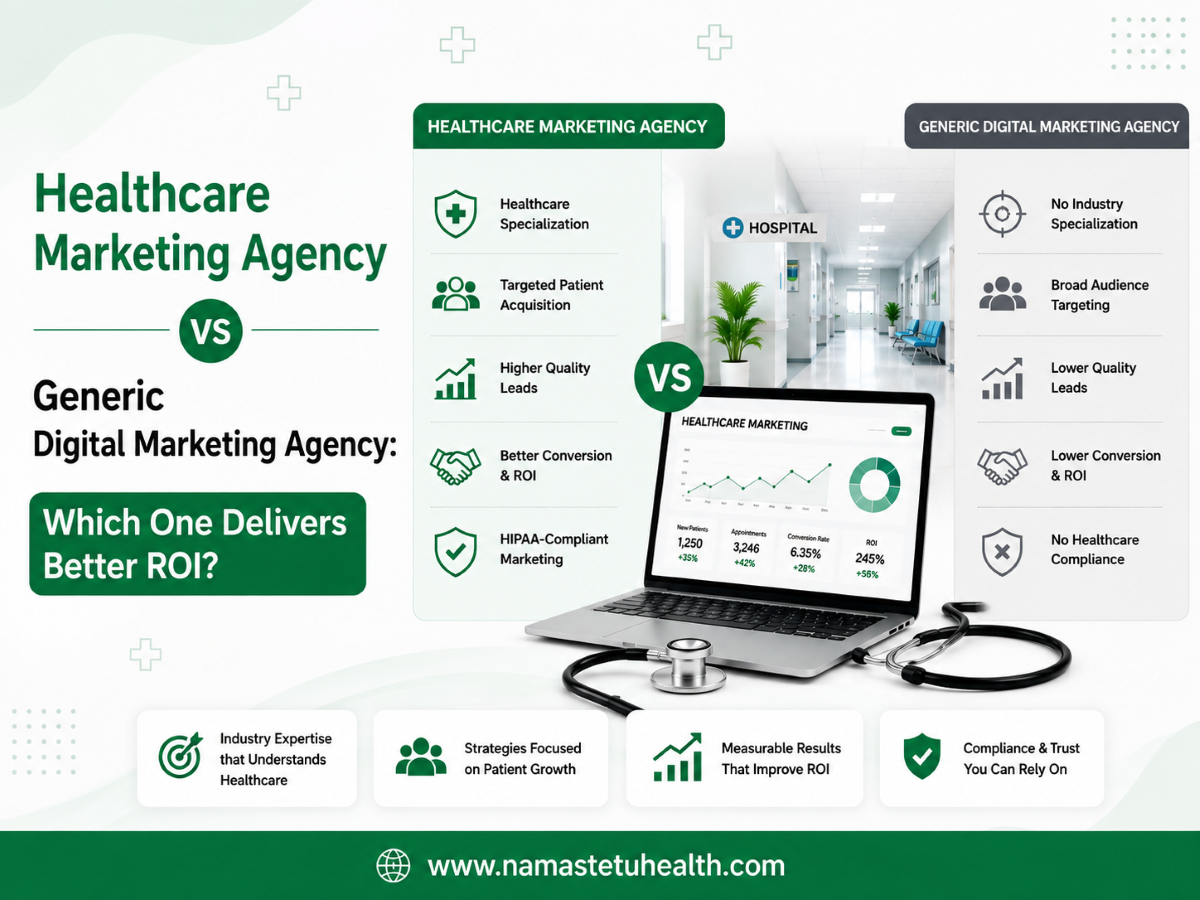
This is the moment when it counts who is performing the task. Healthcare SEO services from a general digital marketing agency yield different results than those from a healthcare-focused partner.
Healthcare involves distinct challenges: YMYL content guidelines, HIPAA-sensitive interactions, industry-specific directories, and the unique trust dynamics associated with medical decision-making. A generalist strategy overlooks these subtleties, frequently leading to either non-ranking content or campaigns that pose compliance risks.
The rapidly expanding practices in AI-driven search collaborate with partners who grasp the entire perspective: how to establish E-E-A-T credibility, how to organize content for AI citation, how to combine local SEO with content strategy, and how to execute all of this in a manner that accurately and professionally reflects the practice.
At Namastetu Health, our focus is solely on healthcare. Our healthcare SEO Services are tailored to the unique ranking elements, trust indicators, and content frameworks that significantly impact clinics, hospitals, and specialists.
Frequently Asked Questions
Q1. Will AI search replace Google for healthcare queries?
Not entirely, but it is expanding the ecosystem. Patients use both traditional Google search and AI tools like ChatGPT and Perplexity. The best strategy is to optimize for both, and fortunately the signals that work for one largely work for the other: structured content, E-E-A-T signals, and strong local foundations.
Q2. How does a healthcare practice get cited in Google AI Overviews?
By creating authoritative, well-structured content that directly answers specific patient questions. Adding schema markup, attributing content to named clinicians, maintaining a technically sound website, and building a strong review profile all contribute to being surfaced in AI-generated answers.
Q3. What is the difference between general SEO and local SEO for healthcare?
General SEO targets broad or national visibility. Local SEO for healthcare focuses specifically on appearing for patients searching in your geographic area, which is where the majority of appointment bookings come from. It involves optimising your Google Business Profile, managing local directory listings, building location-specific content, and cultivating reviews.
Q4. How often should healthcare content be updated to stay relevant for AI search?
Clinical content should be reviewed and updated at least annually, with the date of last review visible on the page. For topics that evolve quickly or pages tied to high-intent search terms, quarterly updates are more appropriate. AI tools and Google both favour content that shows signs of being maintained and current.
Q5. How does Namastetu Health approach AI-era healthcare SEO?
We build a full-stack approach: technical SEO foundations, E-E-A-T-aligned content strategy, local SEO optimisation, and content structured for AI citation. We also provide regular performance reporting so practices can see exactly where visibility is growing and where opportunities remain untapped.
Conclusion
The healthcare professionals who remain prominent in an AI-driven search landscape are not always the largest or the most well-funded. They are those who have established the proper foundations: trustworthy content credited to genuine experts, an entirely optimized local presence, a robust review profile, and a technically proficient website that is easily navigable for both patients and AI platforms.
All of this is attainable for clinics of any size. It necessitates consistency, knowledge, and a healthcare-specific strategy instead of one taken from a general digital marketing guide.
That is precisely what Namastetu Health provides. If you are ready to build the kind of digital visibility that brings the right patients to you, before your competitors claim that space, we would love to start the conversation.