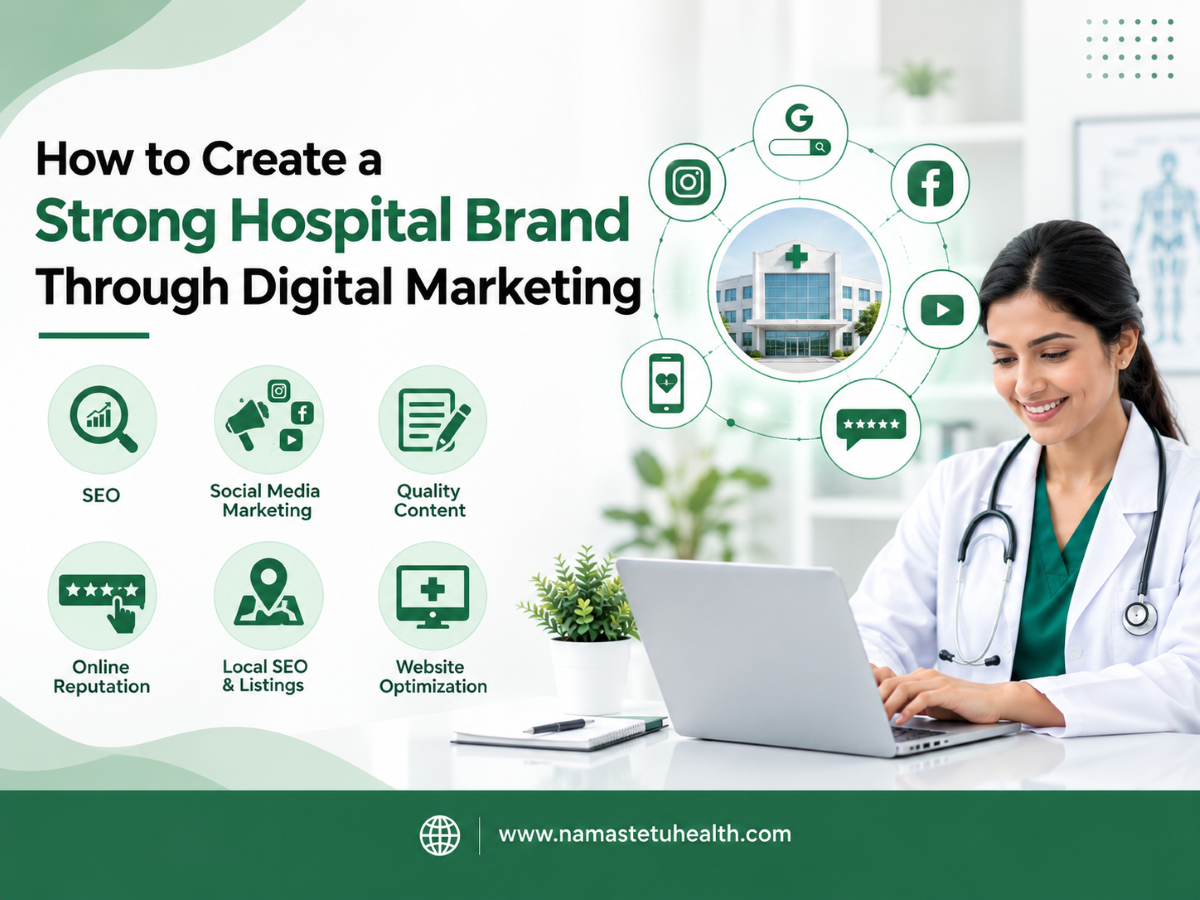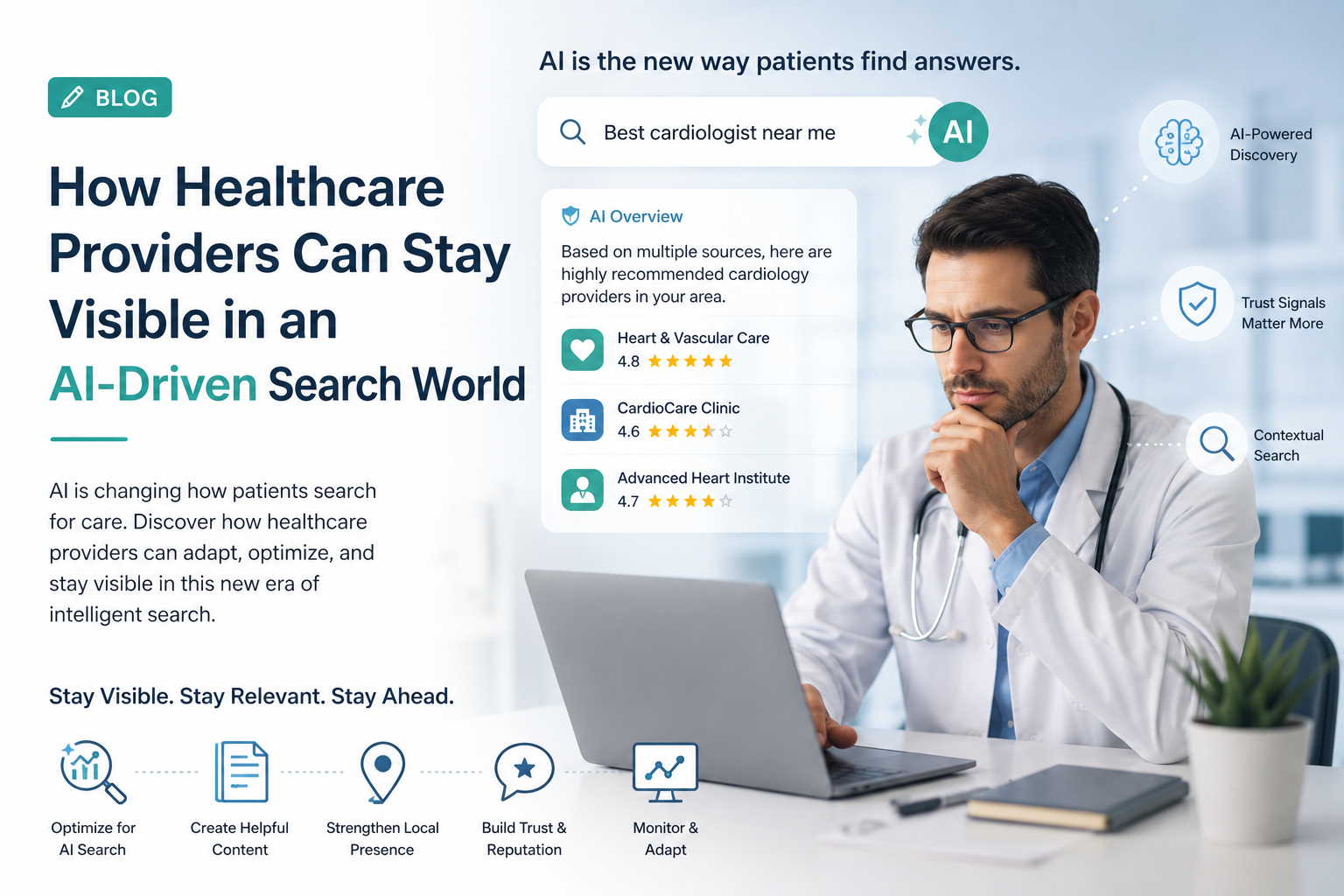
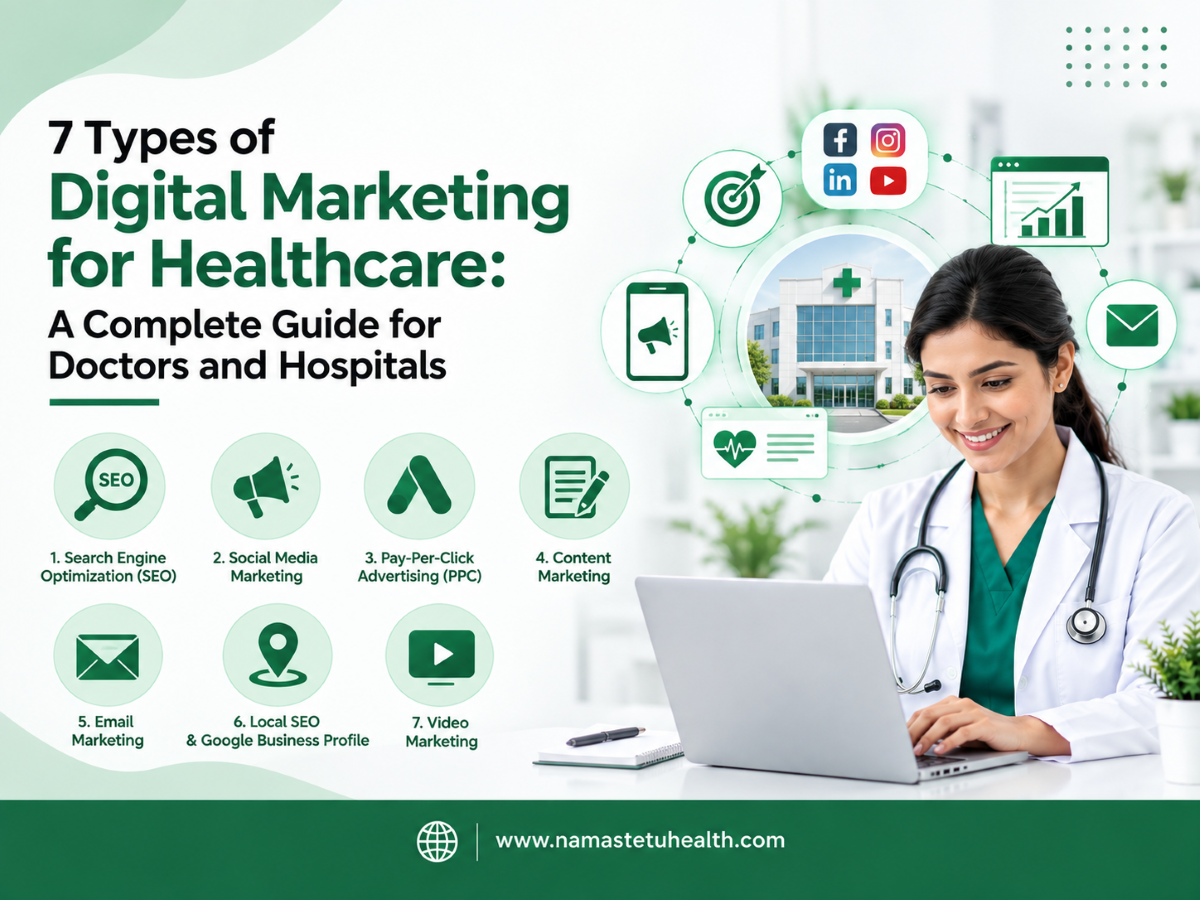
Digital marketing for a hospital or clinic is not one single activity, it is a set of distinct channels, each solving a different problem, from getting found in search to keeping existing patients engaged after their first visit. The 7 types of digital marketing for healthcare covered here are SEO, website development, social media, paid advertising, reputation management, email marketing, and content marketing, explained individually so a practice can see exactly what each one does and when it actually matters. Namastetu Health breaks each one down clearly here, since good Digital Marketing for Healthcare works best when a practice understands these differences, rather than attempting all seven poorly at once.
The 7 Types at a Glance
| Type | What It Does | Best Suited For |
| SEO | Helps patients find you in search results | Long-term, steady visibility |
| Website Development | Converts visitors into booked patients | Every practice, as a foundation |
| Social Media Marketing | Builds familiarity and trust over time | Patient education and recognition |
| Paid Advertising (PPC) | Delivers immediate visibility | Fast results or new practice launches |
| Reputation Management | Shapes how patients perceive you | Practices with inconsistent reviews |
| Email Marketing | Keeps existing patients engaged | Retention and follow-up care |
| Content Marketing | Answers real patient questions | Building authority and trust |
Each of these works differently, and understanding that difference is usually the first step toward spending a marketing budget wisely instead of scattering it thin. This matters just as much for a large, multi-department setup as it does for a solo practice, which is why thoughtful Digital Marketing for Hospitals usually starts with this exact kind of channel-by-channel breakdown.
1. SEO: Getting Found When Patients Are Searching
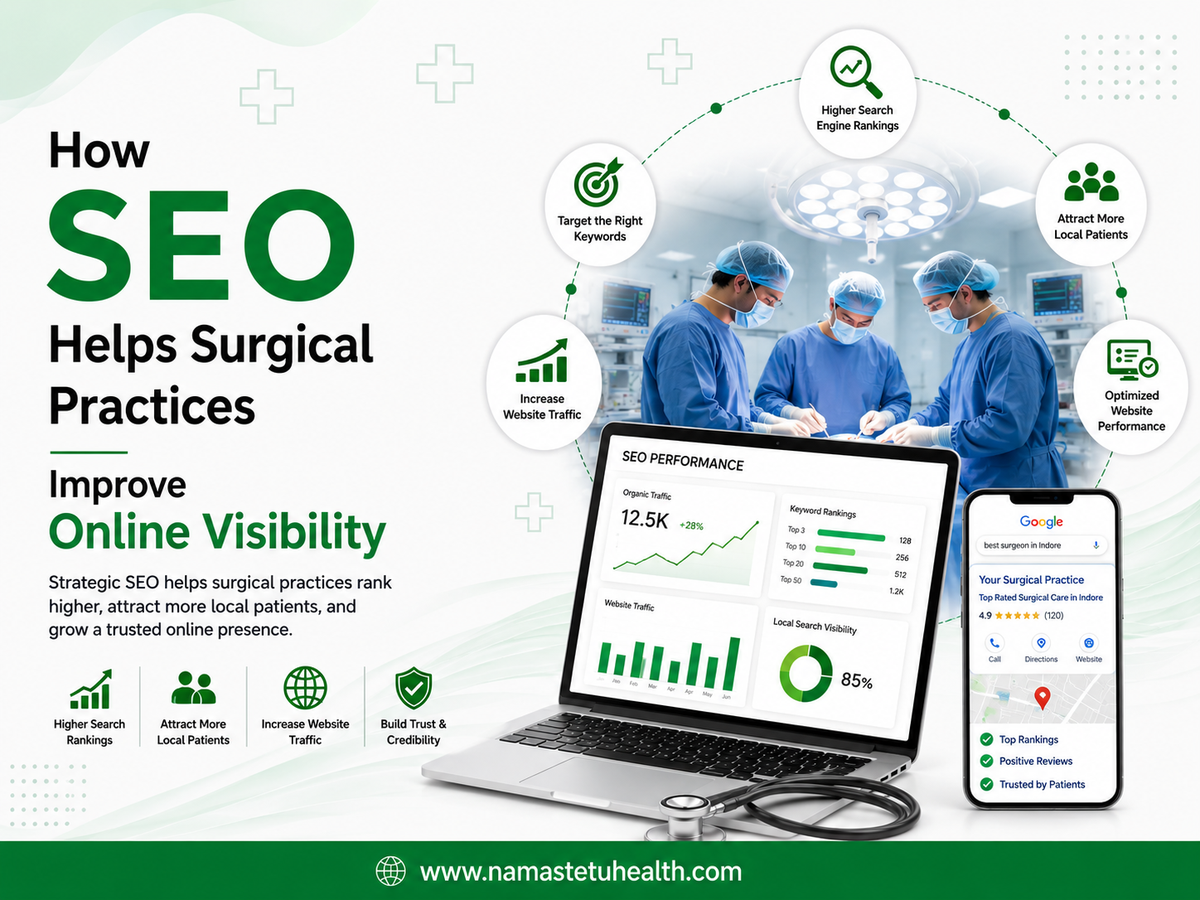
Search engine optimization makes a practice visible when someone searches for a relevant condition, specialty, or location, without paying for each click. It works slowly but builds a kind of visibility that keeps paying off long after the initial effort.
Solid SEO Services For Healthcare typically focus on local search accuracy, properly structured department or specialty pages, and content that answers real patient questions clearly.
The results take patience to build, but they tend to compound over time, since a well-ranked page keeps attracting patients long after the work to create it is finished.
2. Website Development: The Foundation Everything Else Relies On
A website is where every other marketing effort eventually sends a patient, which means a slow, confusing, or outdated site quietly undoes the value of everything built around it. Speed, clarity, and an obvious path to booking matter more than visual polish alone.
Thoughtful Website Development For Healthcare treats the site as infrastructure, not decoration, built to convert interest into an actual appointment rather than simply looking professional.
3. Social Media Marketing: Building Familiarity Before the First Visit
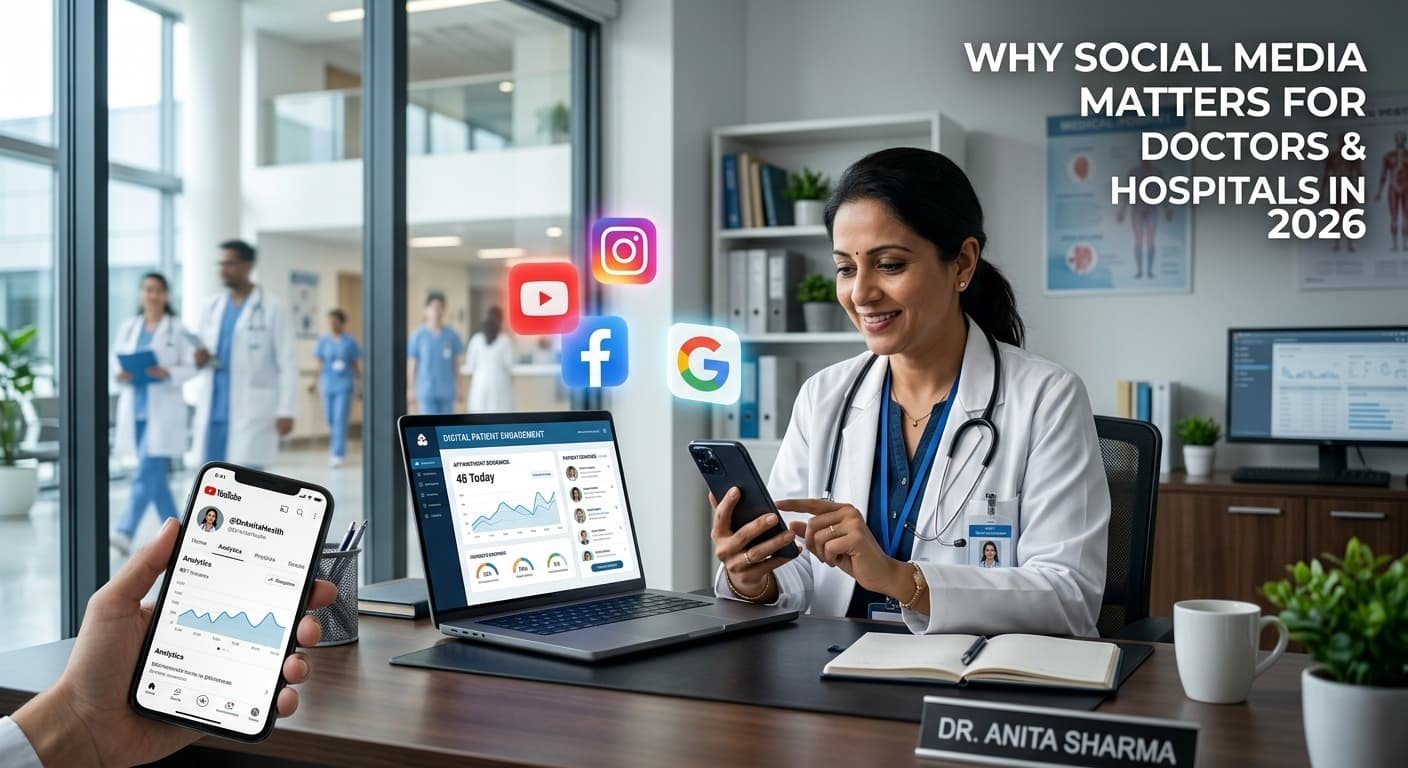
Social platforms let a practice become a familiar, recognizable presence before a patient ever needs to book an appointment. Short videos, honest patient stories, and everyday clinic moments tend to work better here than polished, promotional content.
Consistent Social Media Marketing For Healthcare builds this familiarity gradually, which is exactly why sporadic posting rarely produces the trust that steady, honest content does over months.
4. Paid Advertising: Visibility When You Cannot Wait
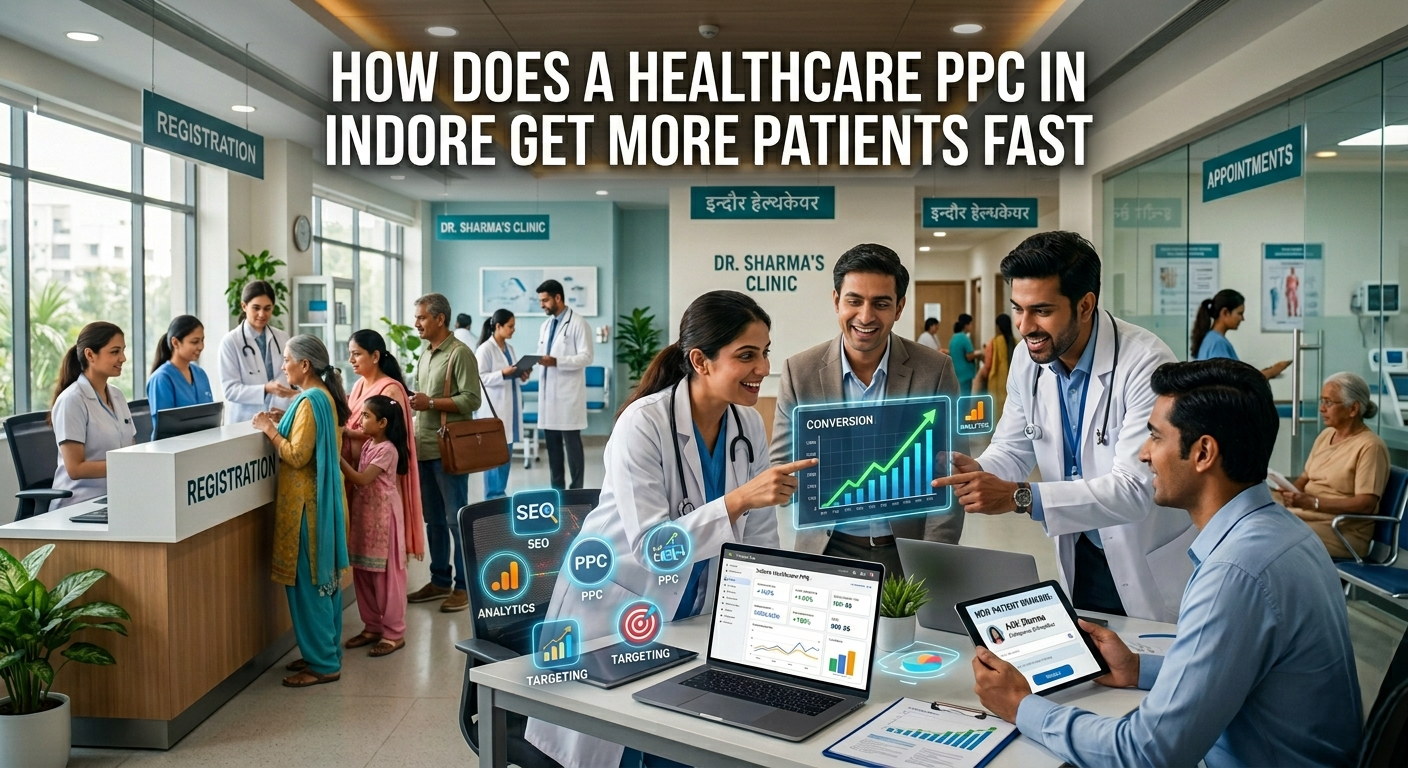
Paid ads buy immediate placement at the top of search results or social feeds, which makes them especially useful for new practices or specific, time-sensitive campaigns. Unlike SEO, visibility disappears the moment spending stops.
Effective PPC Services For Healthcare focus on specific, realistic patient questions matched to a simple landing page, rather than broad, generic campaigns that waste budget on unqualified clicks.
5. Reputation Management: Controlling the Narrative Patients Actually Read
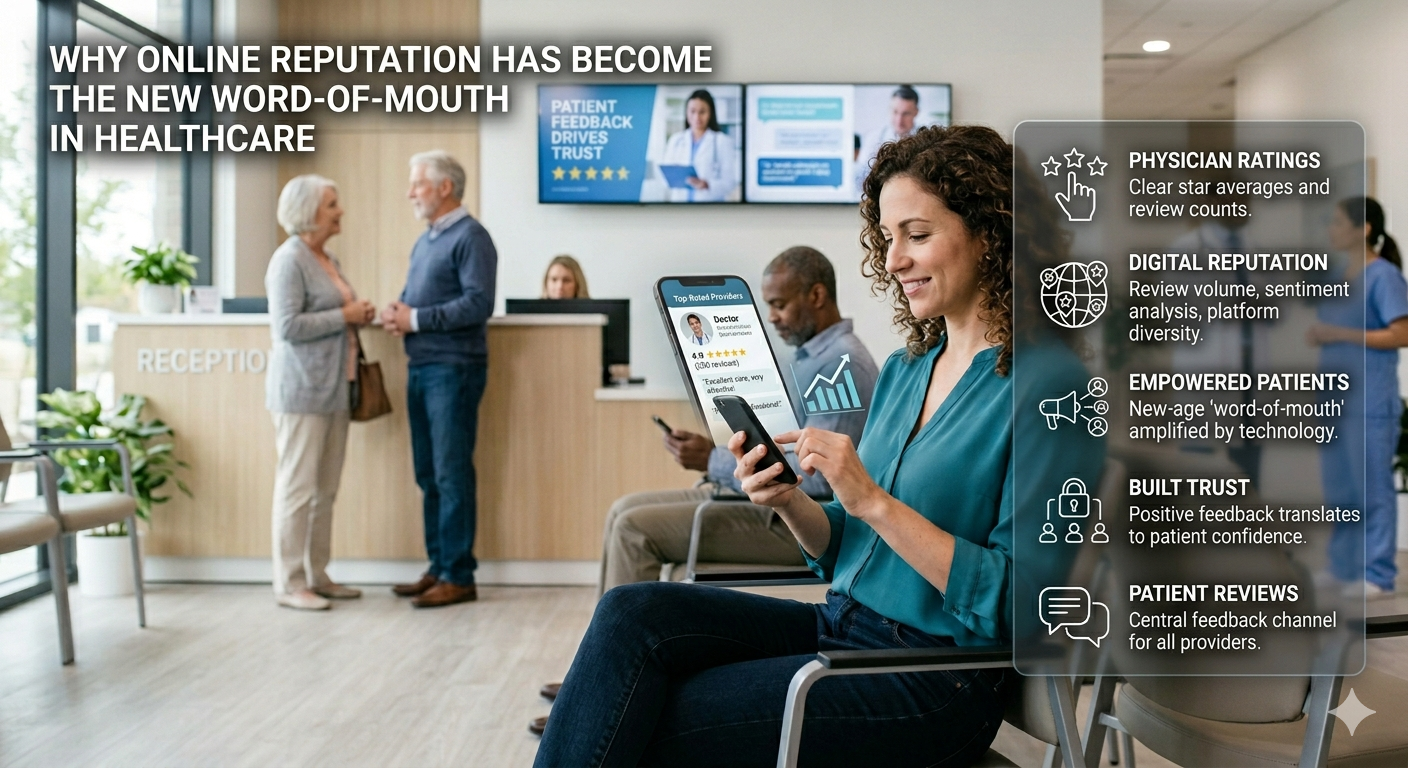
Before booking, most patients read reviews, and a handful of unanswered or negative ones can outweigh years of excellent care in a patient’s first impression. This type of marketing is less about generating praise and more about handling feedback honestly.
Careful Reputation Management For Healthcare means responding to every review, positive or negative, with professionalism, and actively inviting genuine feedback rather than only hoping for it passively.
A thoughtful response to a difficult review often reassures future patients more than a string of generic five-star ratings ever could, since it shows how the practice actually handles concerns.
6. Email Marketing: Keeping Patients Engaged After the First Visit
New patient acquisition gets most of the attention, but keeping existing patients engaged is often cheaper and more valuable than constantly chasing new ones. Email remains one of the most direct ways to do this.
Simple Email Marketing For Healthcare might include appointment reminders, seasonal health tips, or gentle follow-ups after a visit, kept useful rather than promotional, so patients do not simply unsubscribe.
7. Content Marketing: Earning Authority Through Real Answers
Content marketing means publishing material that genuinely answers patient questions, building trust and authority over time rather than promoting services directly. This overlaps with SEO but focuses specifically on the quality and usefulness of what gets written.
Comprehensive Digital Marketing for Doctors relies heavily on this type, since consistent, honest content is usually what makes every other channel work better together.
How to Decide Which Types Actually Matter for Your Practice
Not every practice needs all seven types running simultaneously, and attempting that often spreads a budget too thin to see real results from any single one. A new practice might lean heavily on paid ads and website development first, while an established one might prioritize reputation management and content.
A few questions worth asking before choosing where to invest:
- Are patients currently finding you, or is visibility the main problem?
- Do your reviews reflect the actual quality of care you provide?
- Is your website converting visitors, or simply existing online?
- Are you keeping existing patients engaged, or only chasing new ones?
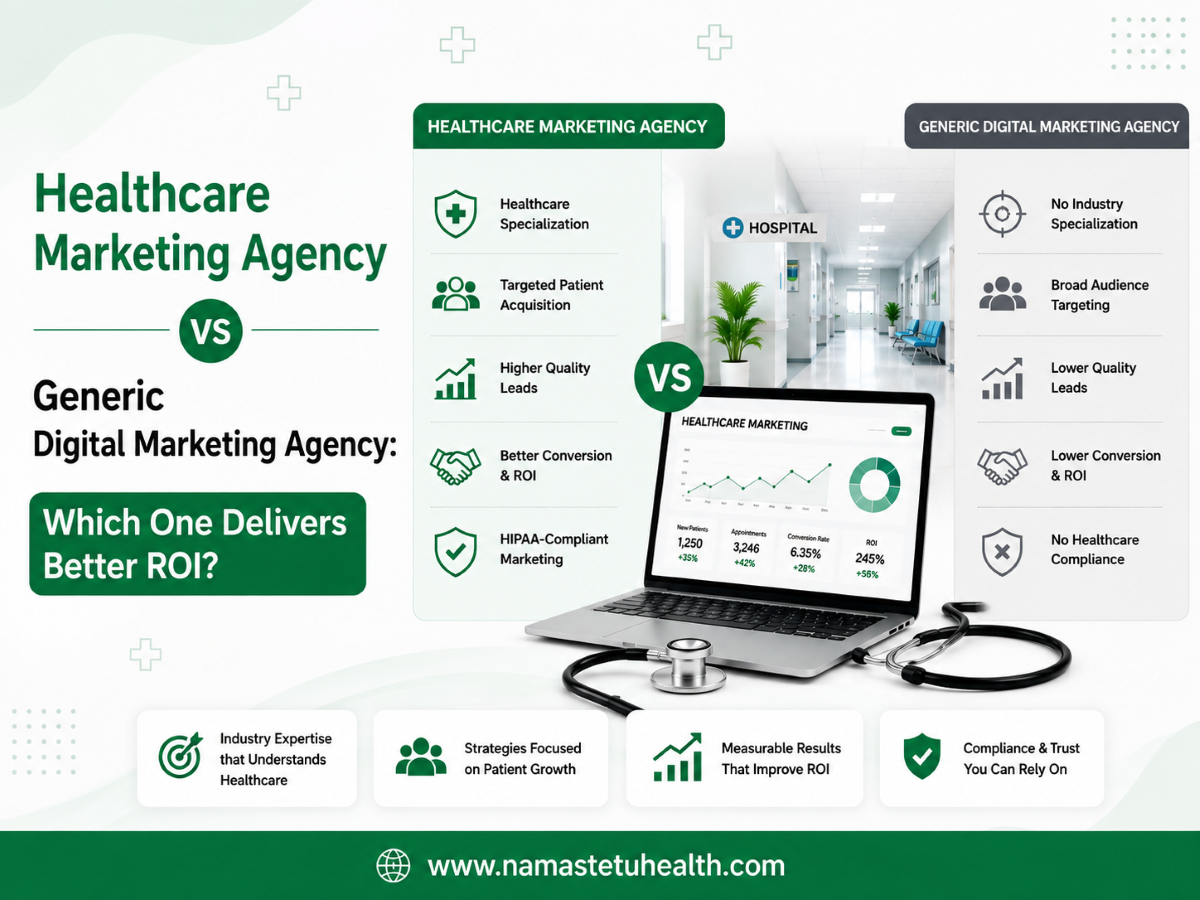
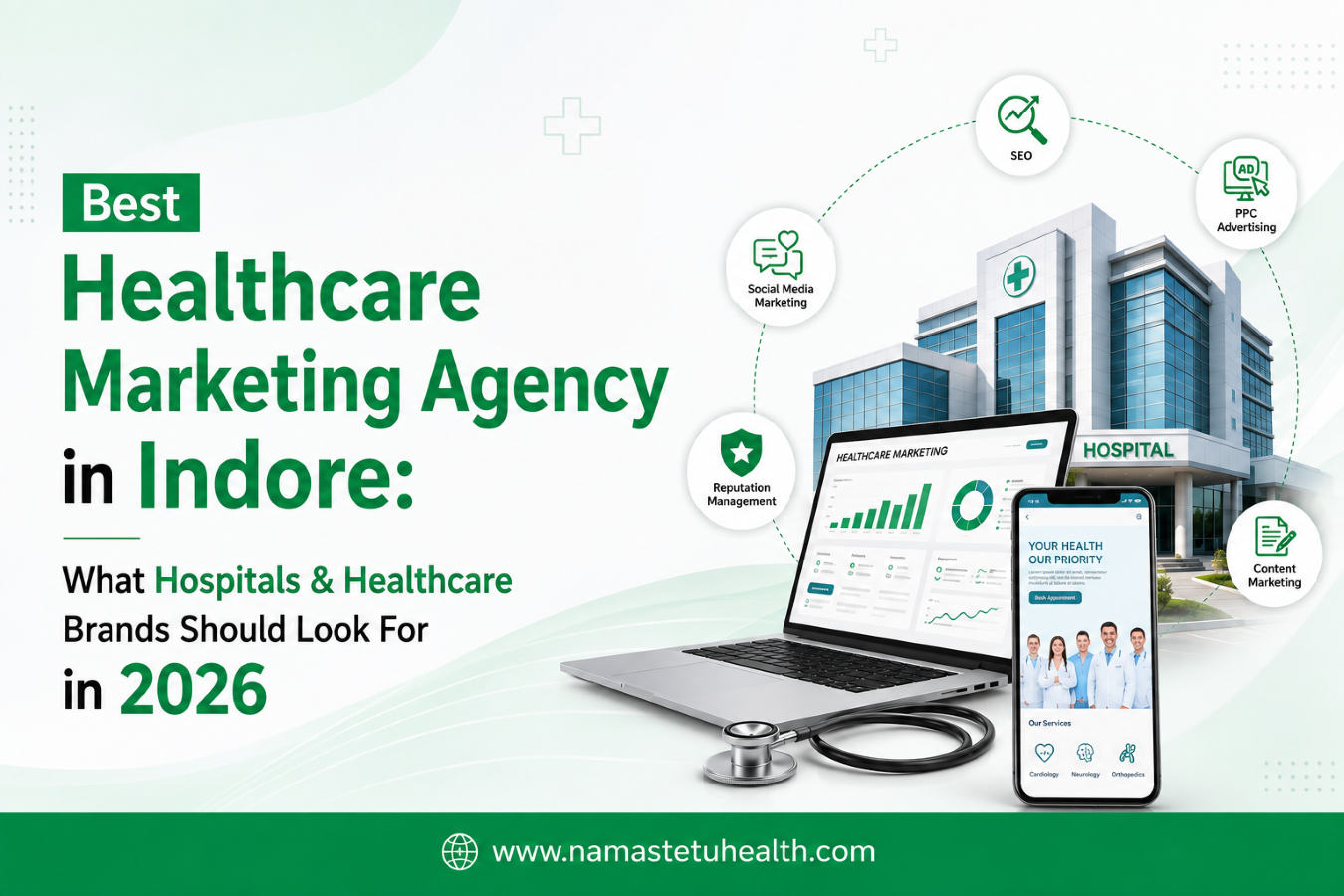
Working with an experienced healthcare digital marketing agency in Indore usually helps answer these questions accurately, since an outside perspective often spots gaps a practice has grown too close to notice on its own.
Frequently Asked Questions on Healthcare Digital Marketing Types
1. Which type of digital marketing should a new practice start with?
Most new practices benefit from starting with website development and paid advertising, since these provide the fastest visible results while SEO and content marketing build in the background.
2. Can a small clinic realistically manage all seven types alone?
Rarely without outside support, since each type requires different skills and consistent attention, which is why many practices start with two or three types done well.
3. How soon do results typically show up from each type?
Paid ads show results within days, while SEO and content marketing usually take three to six months to build meaningful, lasting visibility.
4. Does reputation management really affect how many new patients a practice gets?
Yes, significantly, since most patients read reviews before booking, and a handful of unanswered negative reviews can quietly discourage otherwise interested patients.
5. Is email marketing still relevant for healthcare practices today?
Yes, especially for patient retention, since a well-timed reminder or follow-up email often brings a patient back far more reliably than any new advertising campaign.
Conclusion
Understanding these seven types of digital marketing is less about doing everything at once and more about choosing the right combination for where a practice actually stands today. The 7 types of digital marketing for healthcare covered here each solve a different problem, from getting found to staying remembered, and the strongest results usually come from combining two or three done consistently rather than all seven done poorly.
If you had to fix just one of these seven areas first, which would move the needle most for your practice? Tell Namastetu Health and we will help you figure out exactly where to start.