For most hospitals and clinics, the answer to SEO vs Google Ads is that SEO builds lasting visibility over several months, while Google Ads brings patient inquiries within days. The better choice depends on your timeline, your budget, and the services you want to promote. Namastetu Health helps providers make this decision using real performance data, and strong Digital Marketing for Hospitals starts with knowing exactly what each channel can and cannot do.
SEO vs Google Ads: The Short Answer
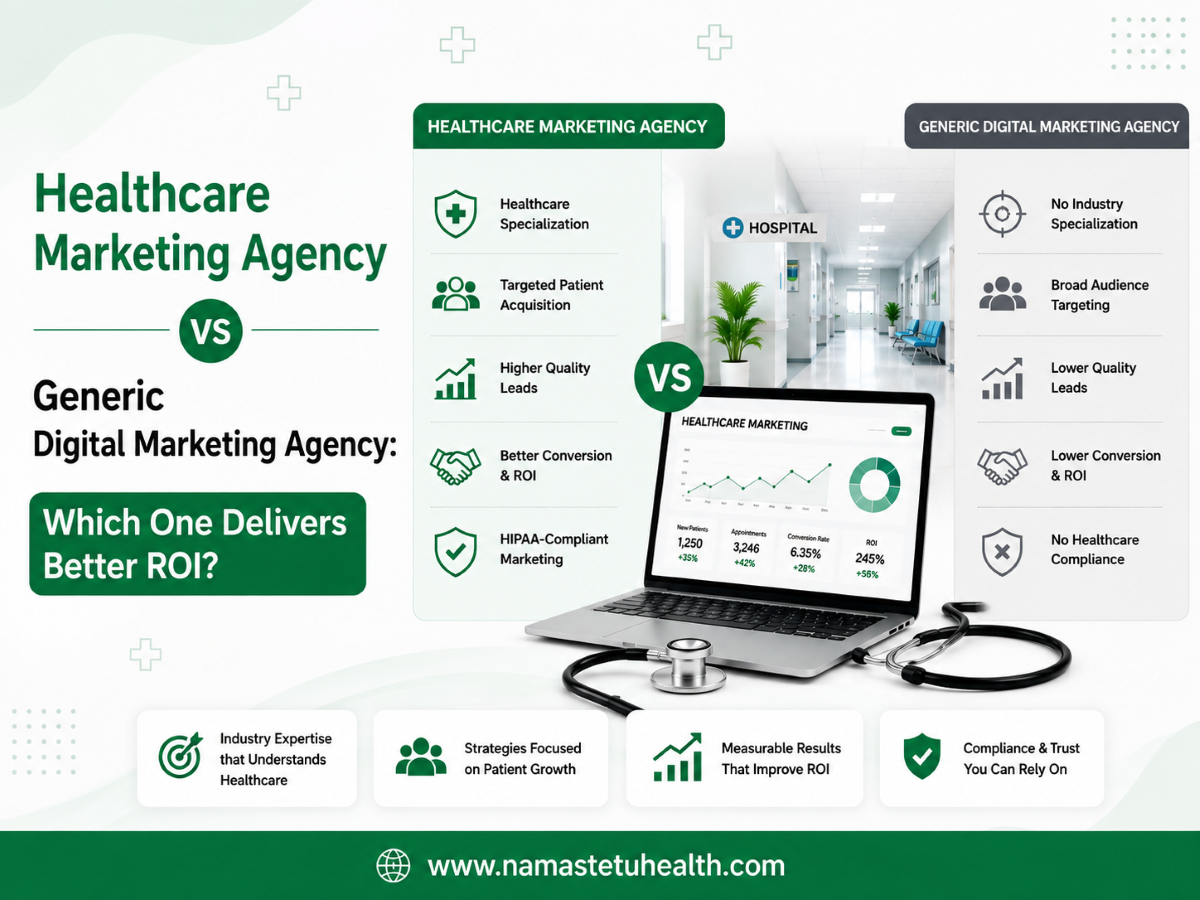
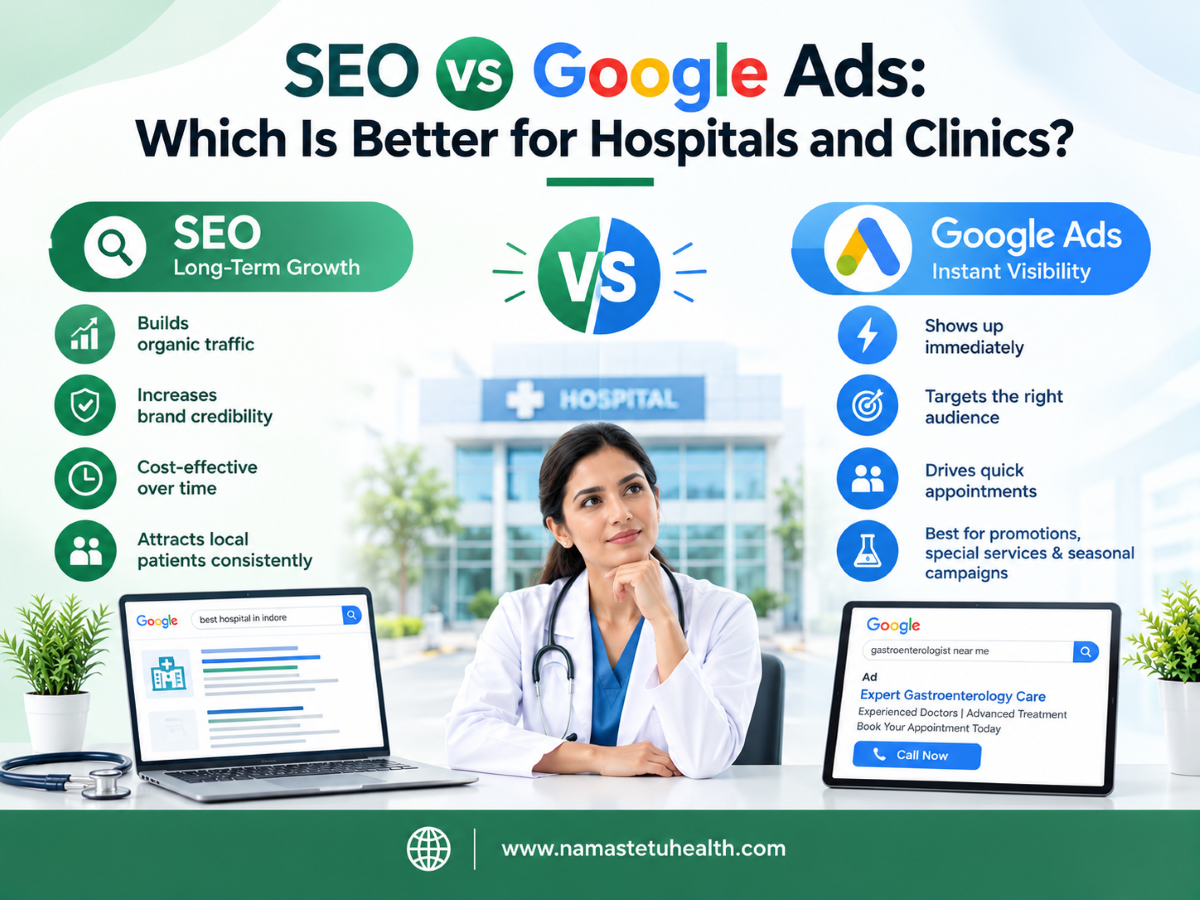
SEO is the better long-term investment, and Google Ads is the better short-term tool. SEO earns unpaid, steady traffic from search results once your pages rank well, while Google Ads charges for each click and stops the moment your spending stops. Hospitals and clinics usually need both, with the balance set by how soon they need new patients.
Side-by-Side Comparison of SEO and Google Ads
The table below compares both channels on the points that matter most to a healthcare provider.
| Factor | SEO | Google Ads |
| Speed of results | Usually 3 to 6 months | Often within days |
| Cost model | Ongoing work, no cost per click | Pay for every click |
| When you stop | Rankings can hold for a while | Visibility ends at once |
| Patient trust | Organic listings feel more natural to many patients | Clearly marked as ads |
| Control over timing | Low, depends on rankings | High, switch on or off anytime |
| Best for | Steady patient flow over time | New services and quick campaigns |
Neither column wins in every row. The SEO vs Google Ads decision comes down to which rows matter most to your practice right now.
How SEO Brings Patients to Hospitals
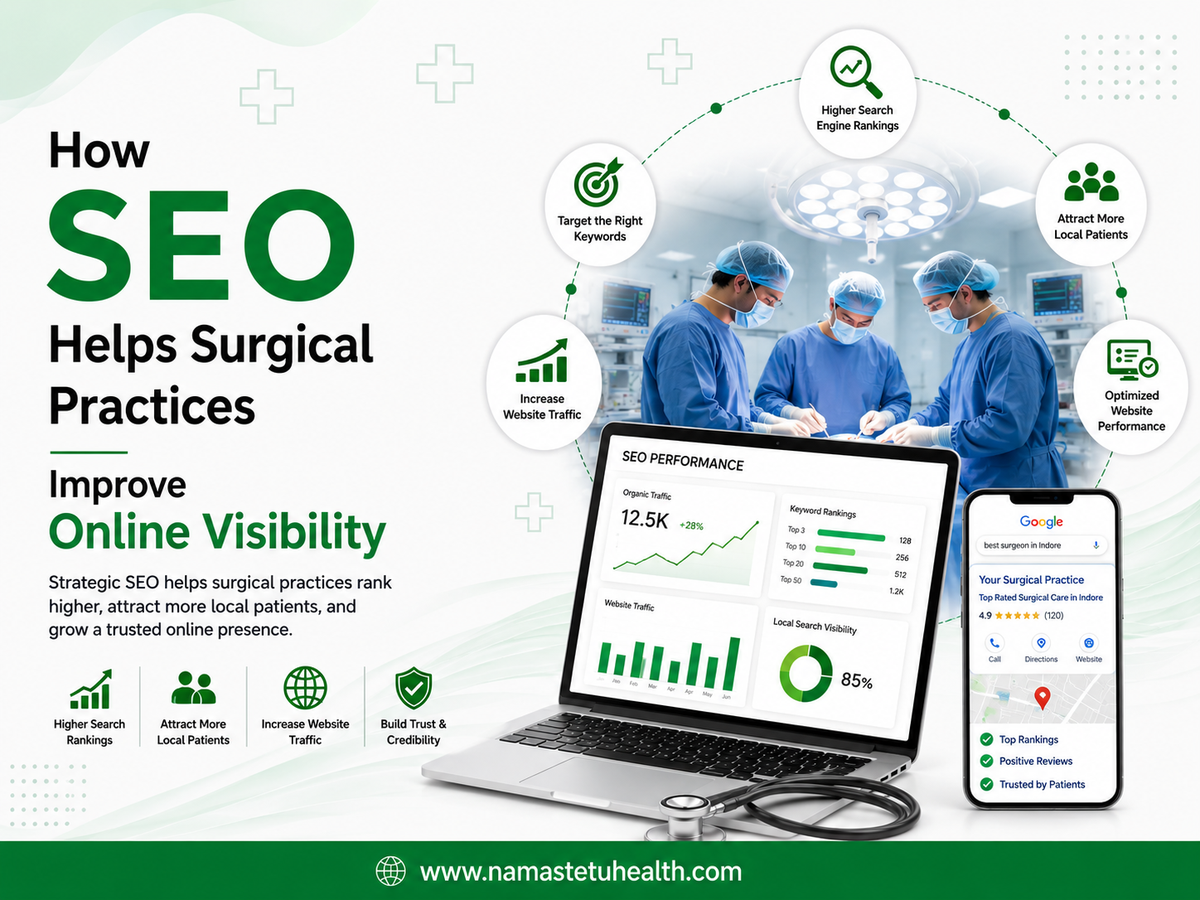
SEO brings patients to hospitals by making department pages, doctor profiles, and local listings appear when people search for a condition or specialty. These pages keep attracting visitors month after month without a cost per click.
Strong SEO Services For Hospitals focus on three areas:
- Clear, separate pages for every department and specialty.
- Accurate local listings and a complete Google Business Profile.
- Content that answers the exact questions patients type or speak into search.
The main drawback is time. Rankings take months to build, and the pace depends on how many competing hospitals your city has.
How Google Ads Brings Patients to Hospitals
Google Ads places a hospital at the top of search results for the searches you choose, and you pay when someone clicks. This makes it the fastest way to reach patients who are looking for a specific service at that moment.
Well-run Performance Marketing service For Hospitals in Indore ties spending to booked appointments instead of clicks alone, so the budget goes toward searches that actually lead to bookings. Google also applies stricter rules to healthcare ads, so ad text and landing pages must follow its policies.
The drawbacks are cost and dependence. Prices rise in busy areas, and your visibility disappears when the budget ends.
Why Clinics Often Should Start With SEO
Clinics often gain the most from starting with SEO because their patients search close to home, and local rankings can bring steady bookings at a lower long-term cost than ads. Local search is also where a smaller practice can compete with a larger hospital.
Practical SEO Services For Clinics begin with the basics that decide local visibility:
- A fully completed Google Business Profile with correct hours and services.
- The same name, address, and phone number on every listing.
- A fast website that works well on a phone.
- A steady flow of genuine patient reviews.
SEO vs Google Ads: How a Clinic Can Split Its Budget
A sensible starting point for a clinic is a larger share of the budget for SEO and a smaller, focused share for Google Ads on one or two high-value services. As organic bookings grow, the ad share can be reduced or moved to a new service.
Careful Digital Marketing for Clinics treats this split as flexible and reviews it every quarter. The review looks at which channel produces booked appointments at the lowest cost.
Ads deserve a bigger share when:
- You are launching a new service or opening a new branch.
- You want to fill a slow season or promote a health camp.
- Your website is new and has not started ranking yet.
SEO deserves a bigger share when:
- Your specialty is established and patients search for it steadily.
- You want to build a name in your local area over the long term.
- You want bookings that do not depend on a daily ad budget.
Mistakes That Waste Budget in Both Channels
The most common mistakes are sending ad clicks to a general homepage, targeting searches that are too broad, ignoring mobile speed, and expecting SEO results within a few weeks.
A few more problems come up often:
- Running ads without tracking phone calls, even though many patients call directly.
- Writing website pages around services instead of around patient questions.
- Changing the plan every month, which never gives either channel time to work.
- Leaving old doctor details and outdated hours on the website and listings.
How to Tell Which Channel Is Working
Measure SEO by organic calls, booking form submissions, and rankings for your main services. Measure Google Ads by cost per booked appointment, not by cost per click, since a cheap click that never books is still a wasted click.
Reviewing these numbers monthly shows which channel earns its share of the budget. It also shows when a landing page or a service page needs to be fixed before more money is spent.
Getting Both Channels to Support Each Other
SEO and Google Ads support each other when they share landing pages, search insights, and tracking. Ads show quickly which searches lead to bookings, and those findings guide which pages SEO should build next.
An experienced healthcare digital marketing agency manages both under one plan, so spending and results are reviewed together instead of in two separate reports. This also prevents the two channels from competing for the same searches without a clear purpose.
Quick Decision Guide
- Need patients within weeks: lead with Google Ads.
- Want steady patients over the next year: lead with SEO.
- Working with a limited budget: start with local SEO and one focused ad campaign.
- Launching a new service or branch: use both from day one.
- Running a large hospital with many departments: run both and review every quarter.
Questions Hospitals and Clinics Ask Before Choosing
1. Is SEO or Google Ads better for a new clinic?
Most new clinics do best by starting both on a small scale. Google Ads brings early bookings while local SEO builds in the background.
2. How long does SEO take to show results?
SEO usually takes three to six months to show clear results. The timeline depends on competition, website quality, and content.
3. Can a clinic stop ads once SEO starts working?
Yes, but gradually. Reduce ad spending only after organic bookings are steady, and keep ads for new services or slow seasons.
4. Are Google Ads allowed for healthcare services?
Yes, but Google applies stricter policies to healthcare advertising. Ad text, landing pages, and some services must follow its rules.
5. How much should a hospital spend on each channel?
No fixed split suits every hospital. Start from your goals, track cost per booked appointment, and adjust the budget every quarter.
Conclusion
The real question in SEO vs Google Ads is not which channel wins, but which one fits your timeline and budget right now. SEO builds a steady flow of patients that lasts, Google Ads brings bookings quickly, and most hospitals and clinics do best with a planned mix of both. Namastetu Health reviews both channels together, so every rupee goes toward booked appointments.
Connect with Namastetu Health to get a clear budget recommendation for your hospital or clinic.