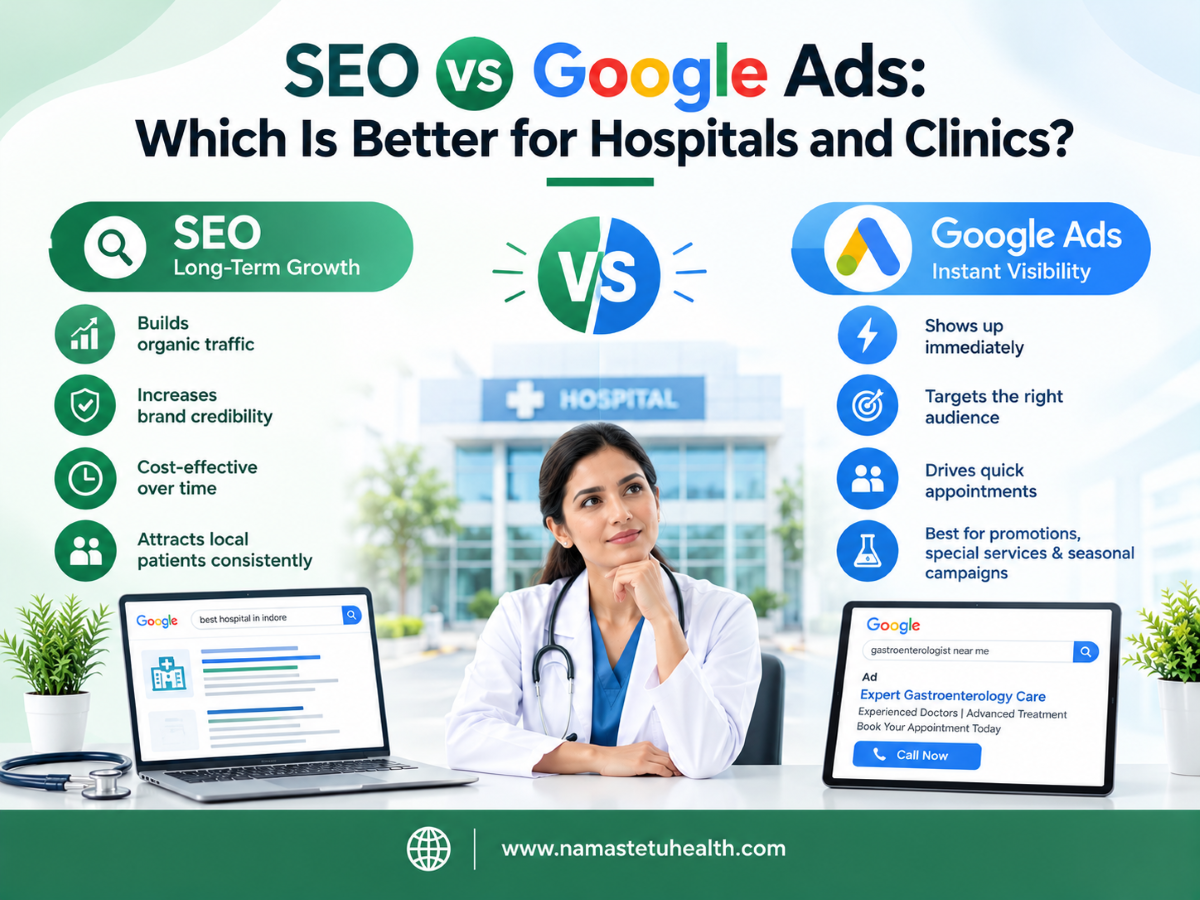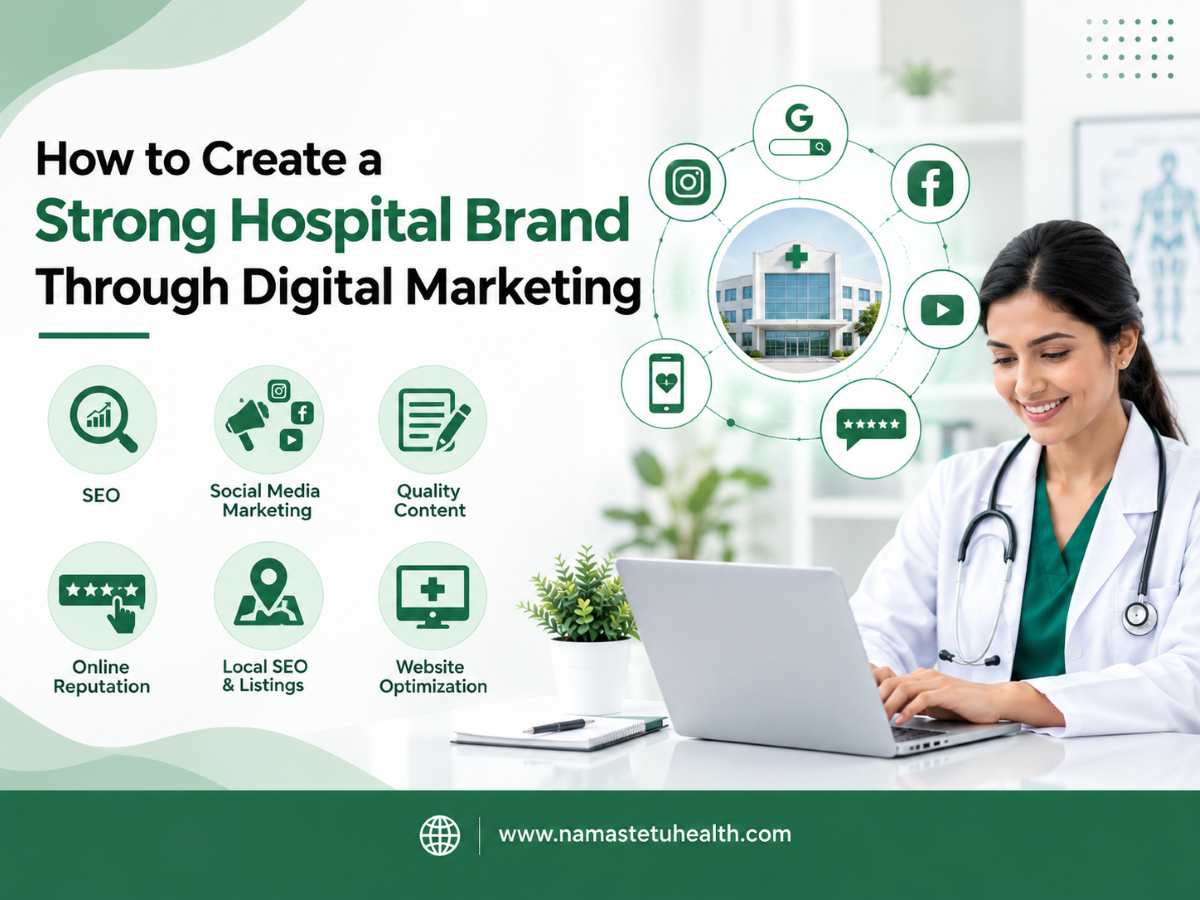
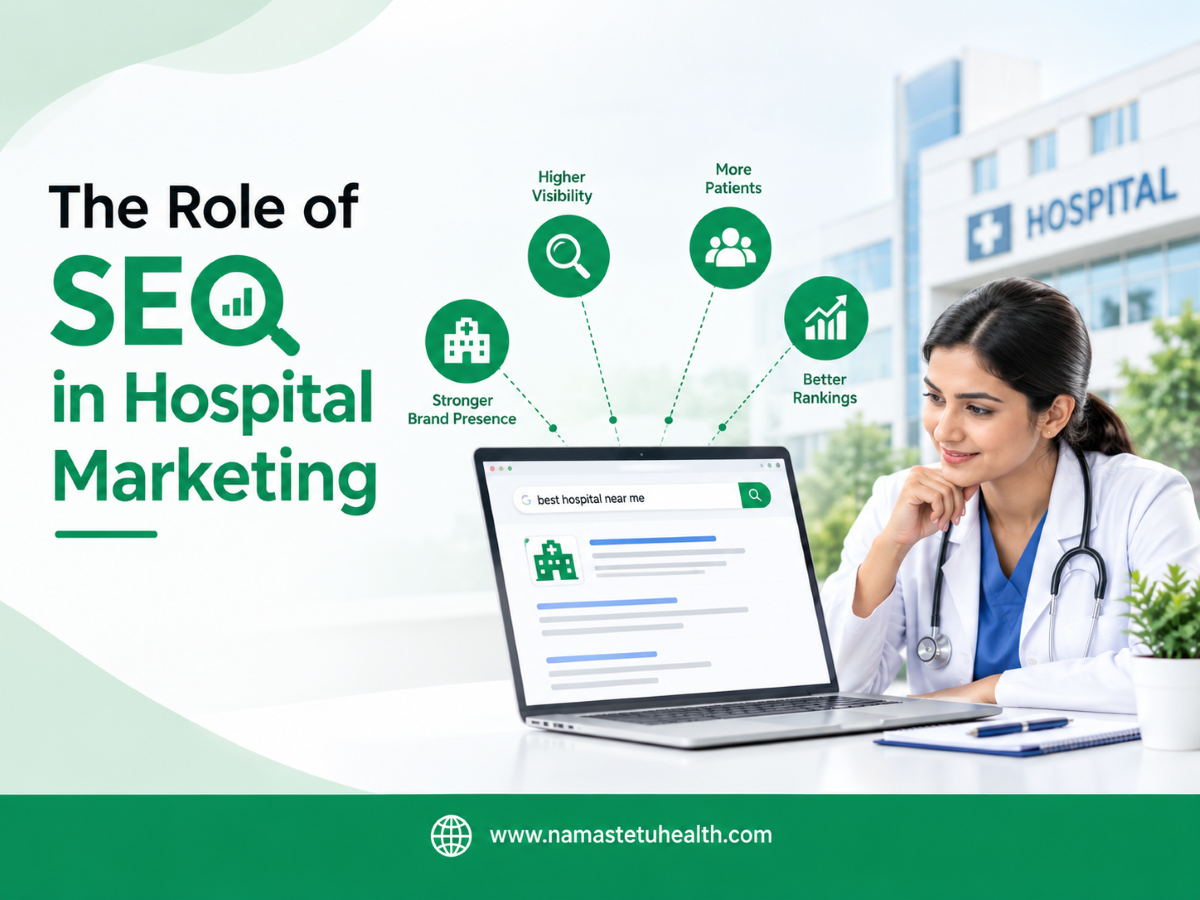
A hospital can have the best doctors, the newest equipment, and genuinely excellent patient outcomes, yet still sit quietly on page three of Google, invisible to the very patients who need it most. The role of SEO in hospital marketing is exactly what closes that gap, turning real medical quality into something patients can actually find, department by department, specialty by specialty.
Namastetu Health works with hospitals that already deliver strong patient care but struggle to show up when someone searches for the exact services they offer. Our approach to healthcare SEO services focuses on this exact gap, helping hospitals become as easy to find online as they already are trustworthy in person. This blog explains why SEO matters so much for hospitals specifically, and what a hospital can realistically do about it.
Why Hospitals Cannot Rely on Reputation Alone
A hospital’s reputation used to spread mostly through word of mouth and physician referrals. That still happens, but it no longer reaches most new patients first.
Today, a person feeling unwell in an unfamiliar city, or simply choosing between two nearby hospitals, almost always starts with a search. If a hospital does not appear clearly in those results, its reputation never even gets the chance to matter.
This gap between actual quality and online visibility is where many respected hospitals quietly lose patients, not to worse care, but to competitors who are simply easier to find.
This gap tends to widen over time too, since a hospital that ranks well keeps attracting more patients and more reviews, while one that stays invisible keeps falling further behind, regardless of the actual quality of care being delivered.
What Makes Hospital SEO Different From Regular Business SEO
Hospitals are not like most businesses. They offer dozens of departments, hundreds of doctors, and a huge range of services, all of which need to be findable individually, not lumped into one general page.
A patient searching for cardiology care and a patient searching for maternity services are looking for completely different pages, doctors, and information, even within the same hospital. This is exactly why thoughtful local SEO for doctors matters so much within a larger hospital system, since a patient often searches for a specific specialist before they ever consider the hospital’s name itself.
Good hospital SEO treats this complexity seriously, building clear, organized pages for each department and specialty rather than trying to cram everything onto one crowded homepage.
This level of organization also helps search engines understand exactly what a hospital offers, which tends to result in the right page showing up for the right search, rather than a generic homepage competing against dozens of far more specific pages from other hospitals.
Building the Right Structure for a Hospital Website
A hospital website needs a clear structure that mirrors how patients actually search, department by department, condition by condition, doctor by doctor. Without this structure, even good content gets lost.
A well-organized hospital website usually includes:
- Separate pages for each major department and specialty.
- Individual doctor profiles with clear credentials and experience.
- Location pages for hospitals or clinics serving multiple areas.
- Simple, obvious paths from any page to booking an appointment.
Good, structured hospital SEO almost always starts with this kind of planning, since even excellent content struggles to rank if it is buried inside a confusing, disorganized website.
The Role of SEO in Hospital Marketing for Local Visibility
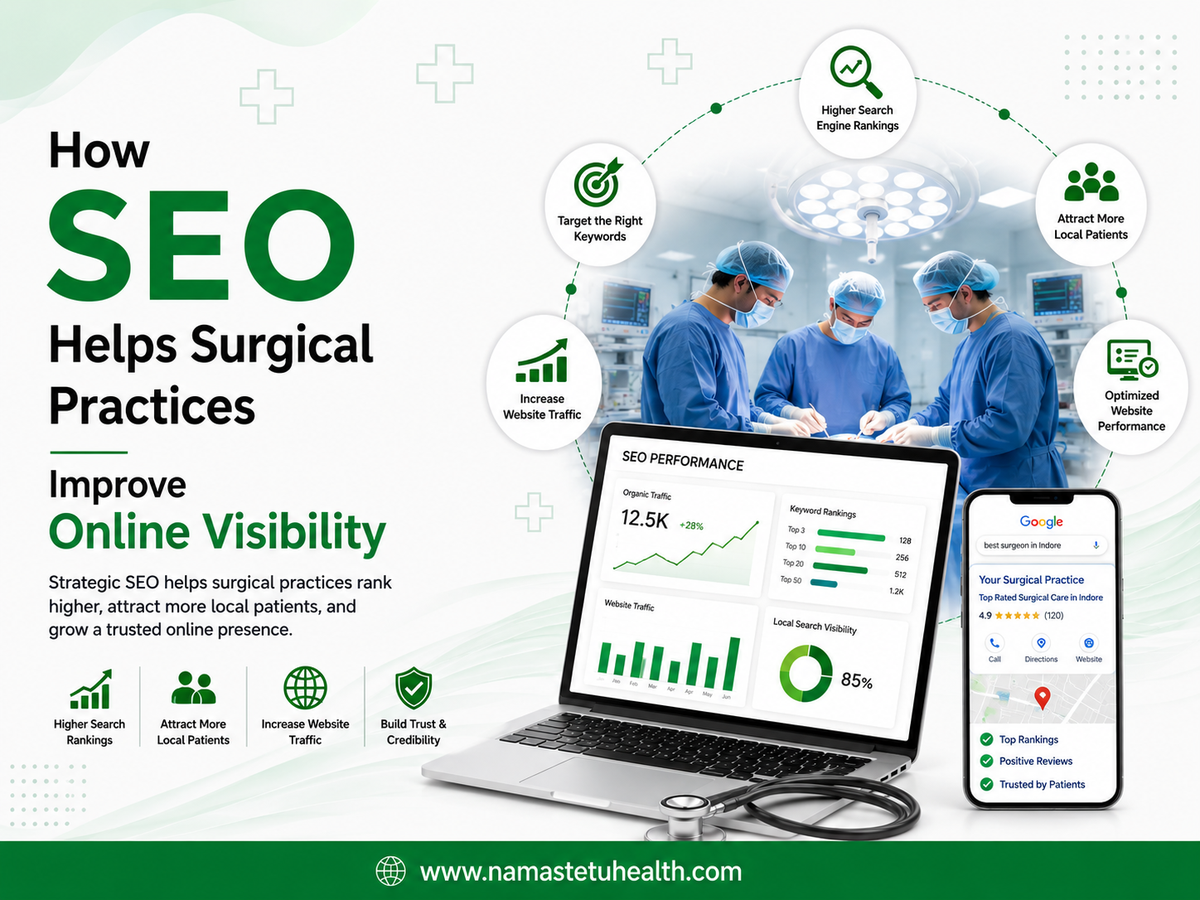
Most patients begin their search locally, typing something like “best hospital for maternity care near me” or simply the name of their city alongside a specialty. Local search results decide who gets seen before a website is even opened.
A few essentials for local visibility include:
- A complete, accurate Google Business Profile for the hospital.
- Consistent name, address, and phone details across every listing.
- Genuine, regularly collected patient reviews.
- Location-specific content for hospitals with multiple branches.
An experienced healthcare SEO agency in Indore typically prioritizes this local groundwork early, since it tends to bring the fastest, most measurable results for a hospital competing in a specific city.
Writing Content That Matches What Patients Actually Search
Patients rarely search using clinical terminology. They search things like “why does my chest hurt when I breathe deeply” or “signs my child needs to see a specialist.”
| Search Type | Patient Concern | Example Content Topic |
| Symptom worry | Understanding a symptom | “What Chest Discomfort Could Mean” |
| Specialist search | Finding the right department | “When to See a Cardiologist vs a General Physician” |
| Procedure questions | Reducing anxiety before a visit | “What to Expect Before Your First MRI” |
| Comparing options | Choosing between hospitals | “Questions to Ask Before Choosing a Hospital” |
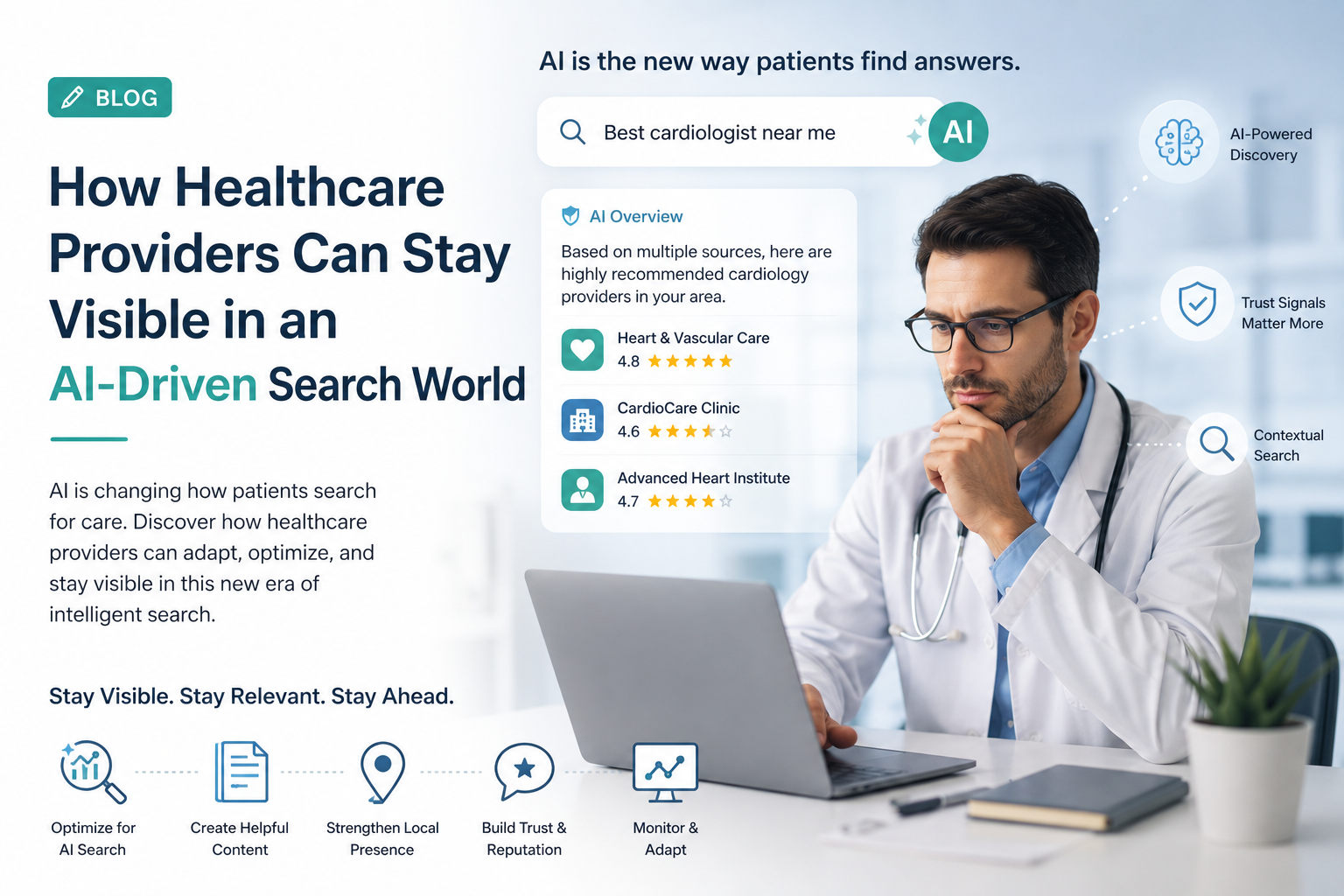
Content answering these exact questions clearly, within the first few lines, also tends to get pulled into short AI-generated summaries at the top of search results, which increasingly answer simple health questions directly.
Supporting Individual Doctors Within the Hospital’s Visibility
A hospital’s overall visibility depends partly on how well its individual doctors are represented online. A patient often searches for a specific type of specialist before they ever consider the hospital name itself.
Giving each physician a properly optimized profile, complete with their specialty, experience, and patient-friendly explanations of what they treat, helps that individual search turn into a hospital visit.
Earning Trust Through Accuracy and Real Expertise
Because health information carries real consequences, search engines hold hospital content to a stricter standard than most other industries. Content needs to demonstrate genuine expertise, not just describe services generically.
A hospital can strengthen this trust by:
- Crediting content to real, named doctors with visible qualifications.
- Linking to credible medical sources when explaining conditions.
- Keeping department and doctor information consistently up to date.
- Avoiding vague, generic descriptions that could apply to any hospital.
A capable SEO agency for healthcare treats this accuracy as a ranking factor, not paperwork, since search engines genuinely evaluate it before trusting hospital content enough to rank it well.
Fitting SEO Into a Hospital’s Broader Marketing Efforts
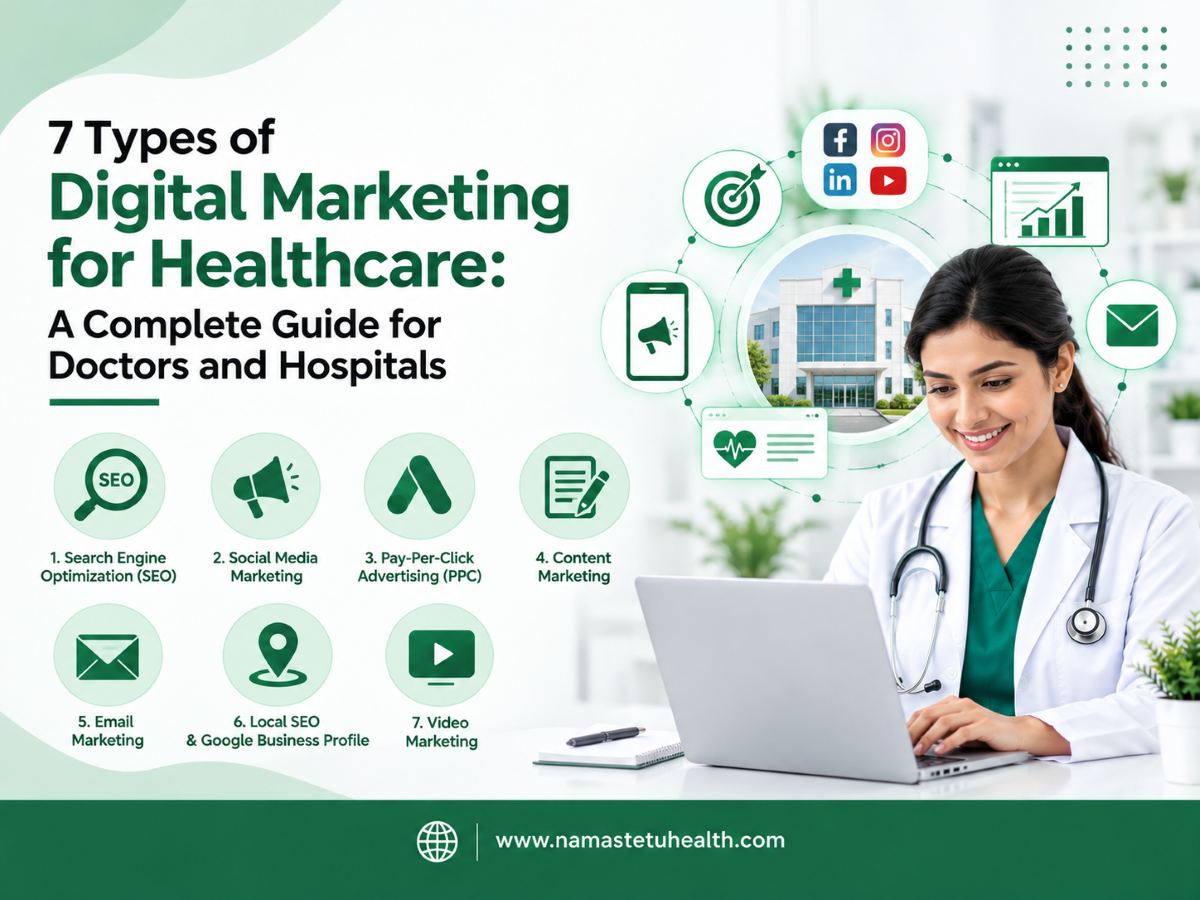
SEO rarely works well in isolation. It performs best alongside consistent content, honest social media presence, and thoughtful paid visibility, all pointing back to the same well-structured website.
Solid digital marketing in healthcare treats SEO as the foundation everything else builds on, since even the best social media campaign eventually sends interested patients back to a hospital’s website to learn more or book an appointment.
Frequently Asked Questions
1. Why is SEO especially important for hospitals compared to smaller clinics?
Hospitals offer far more departments and services, so without clear SEO structure, patients often cannot find the exact specialty or doctor they actually need.
2. How long does it take for a hospital to see results from SEO?
Most hospitals notice steady improvement in visibility and inquiries within four to six months, though larger websites can take slightly longer due to their size.
3. Should each hospital department have its own dedicated page?
Yes, separate department pages tend to rank far better than one general page, since they match exactly what a patient is searching for.
4. Do individual doctor profiles really affect hospital SEO?
Yes, patients often search for a specific type of specialist first, so well-optimized doctor profiles can bring in patients who later choose the hospital itself.
5. Can SEO work well without any paid advertising support?
Yes, though pairing steady SEO with occasional paid visibility often helps a hospital stay visible faster while organic rankings continue building in the background.
Conclusion
A hospital’s quality of care rarely speaks for itself online, it needs a clear, well-structured path for patients to actually find it. The role of SEO in hospital marketing is ultimately about closing that gap, turning genuine medical expertise into something patients can search for, trust, and choose with confidence. Small, consistent improvements across structure, content, and local visibility can steadily turn a hospital’s online presence into a genuine source of new patients.
Talk to Namastetu Health about making your hospital easier to find online or reach out for a quick look at where your hospital currently ranks.