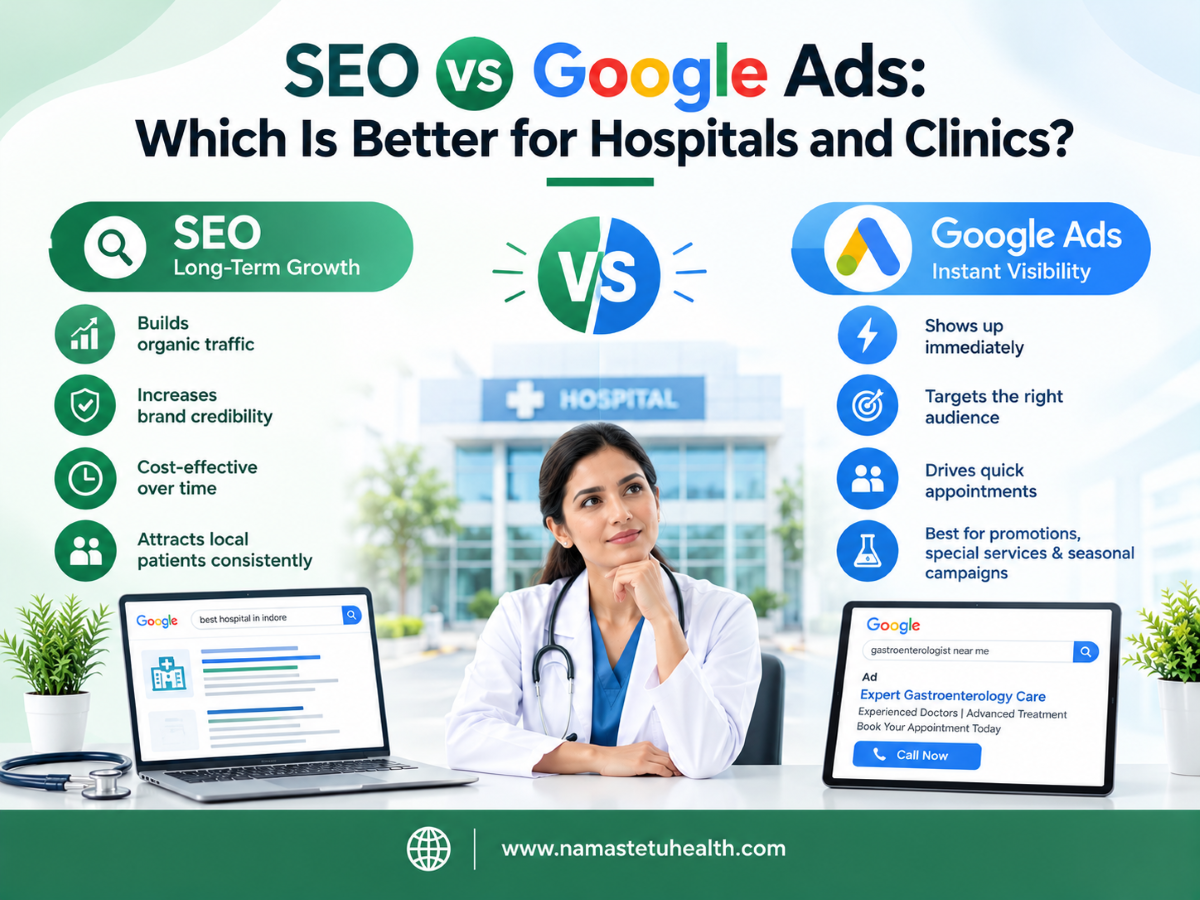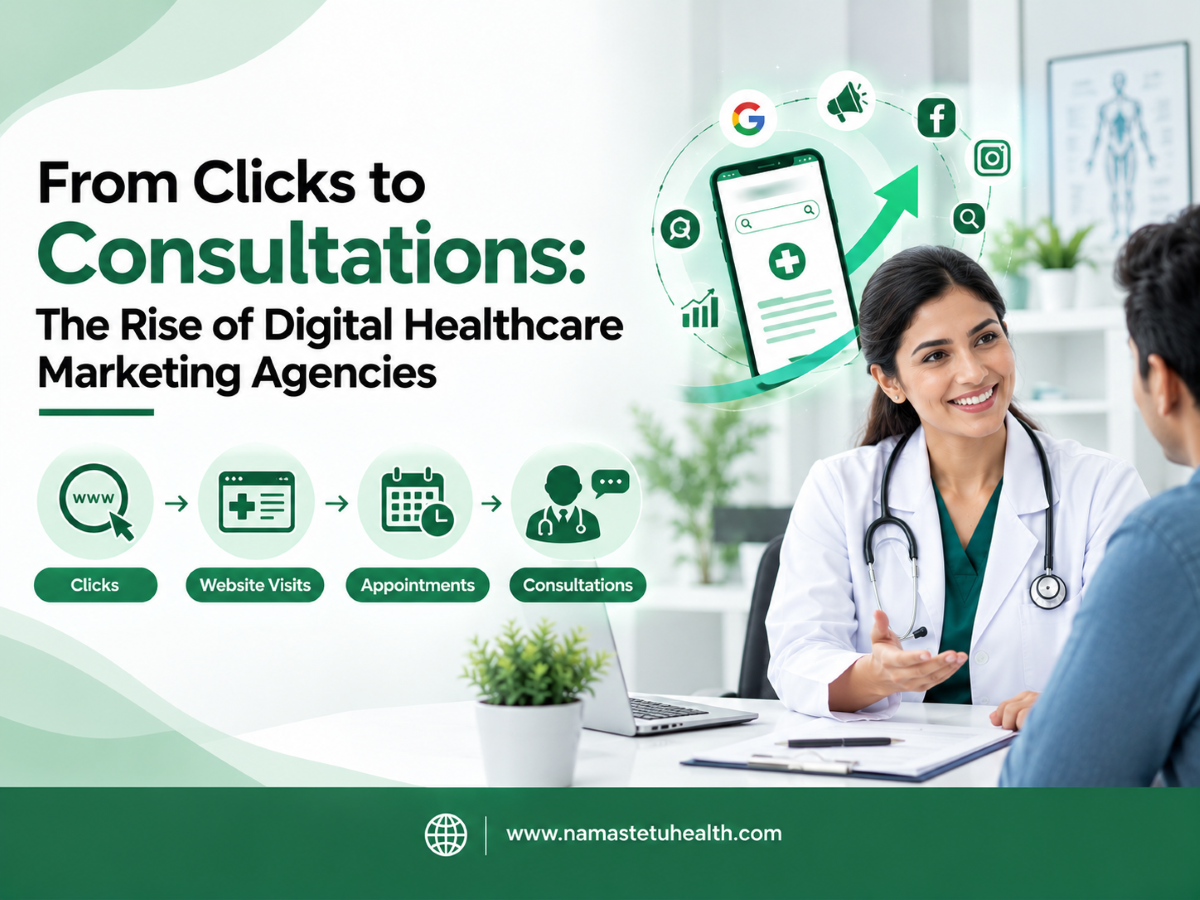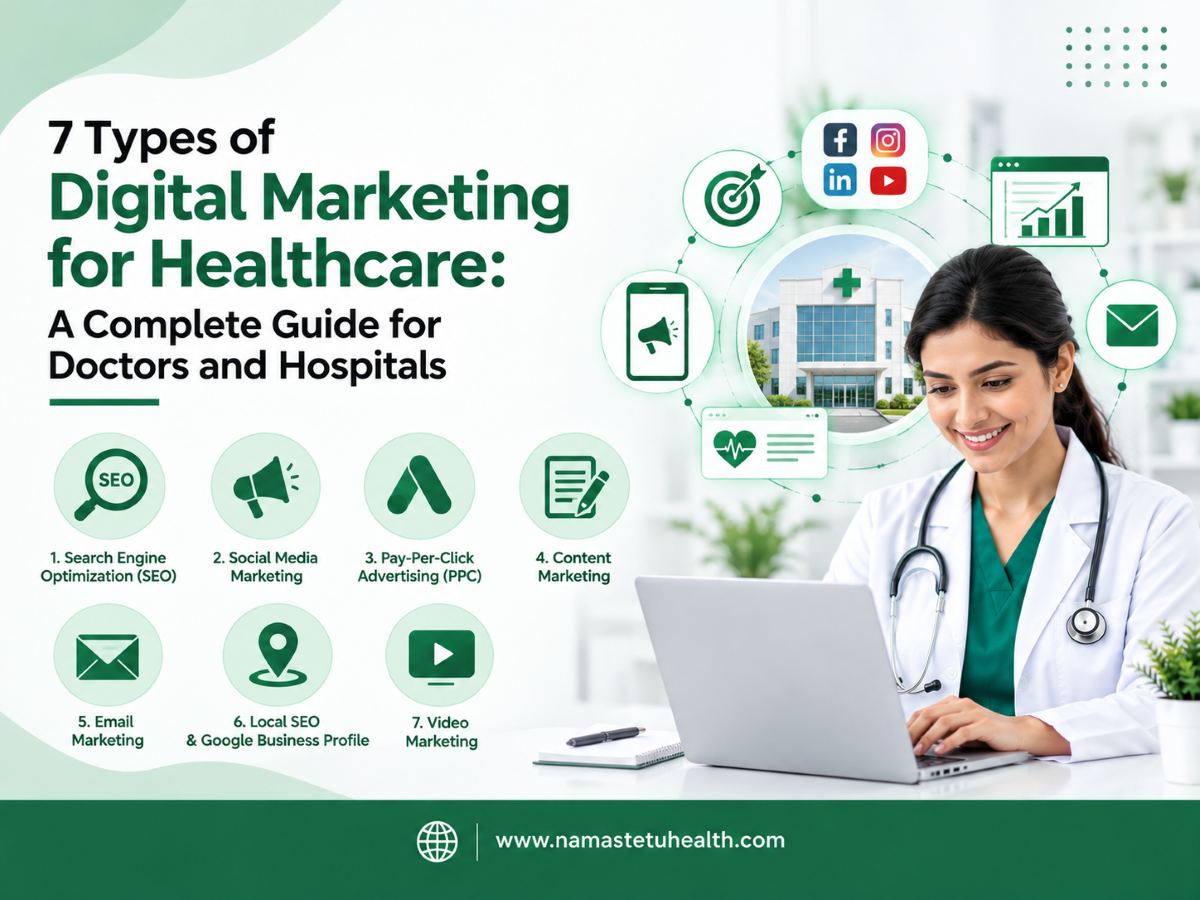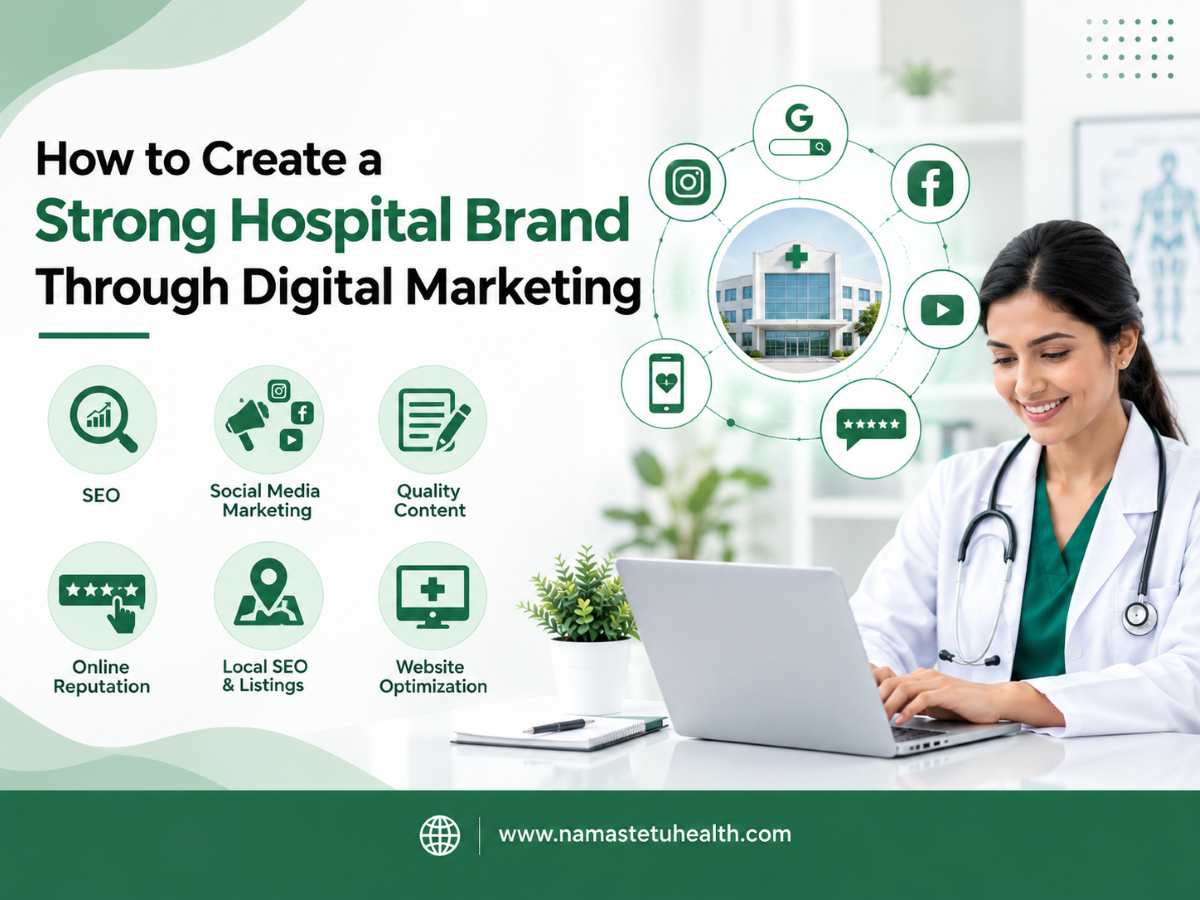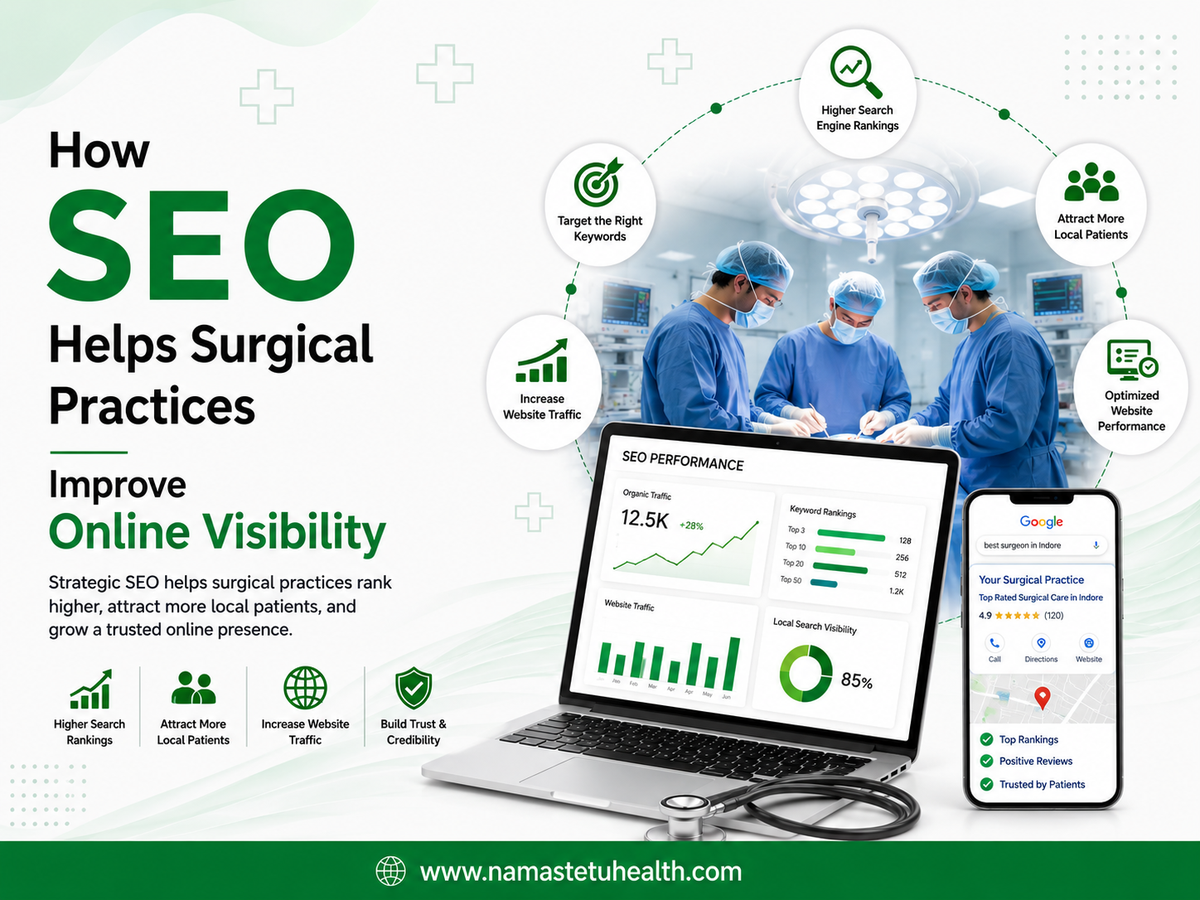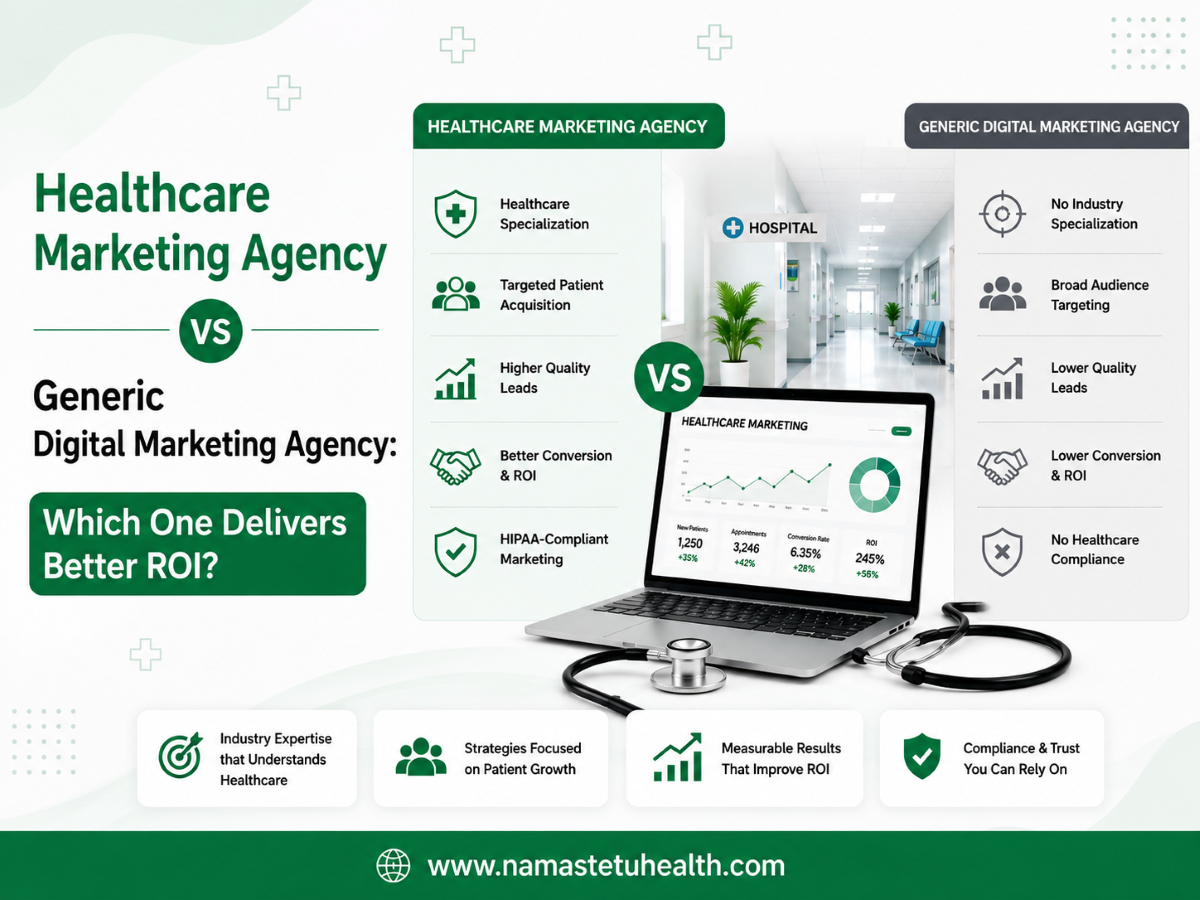
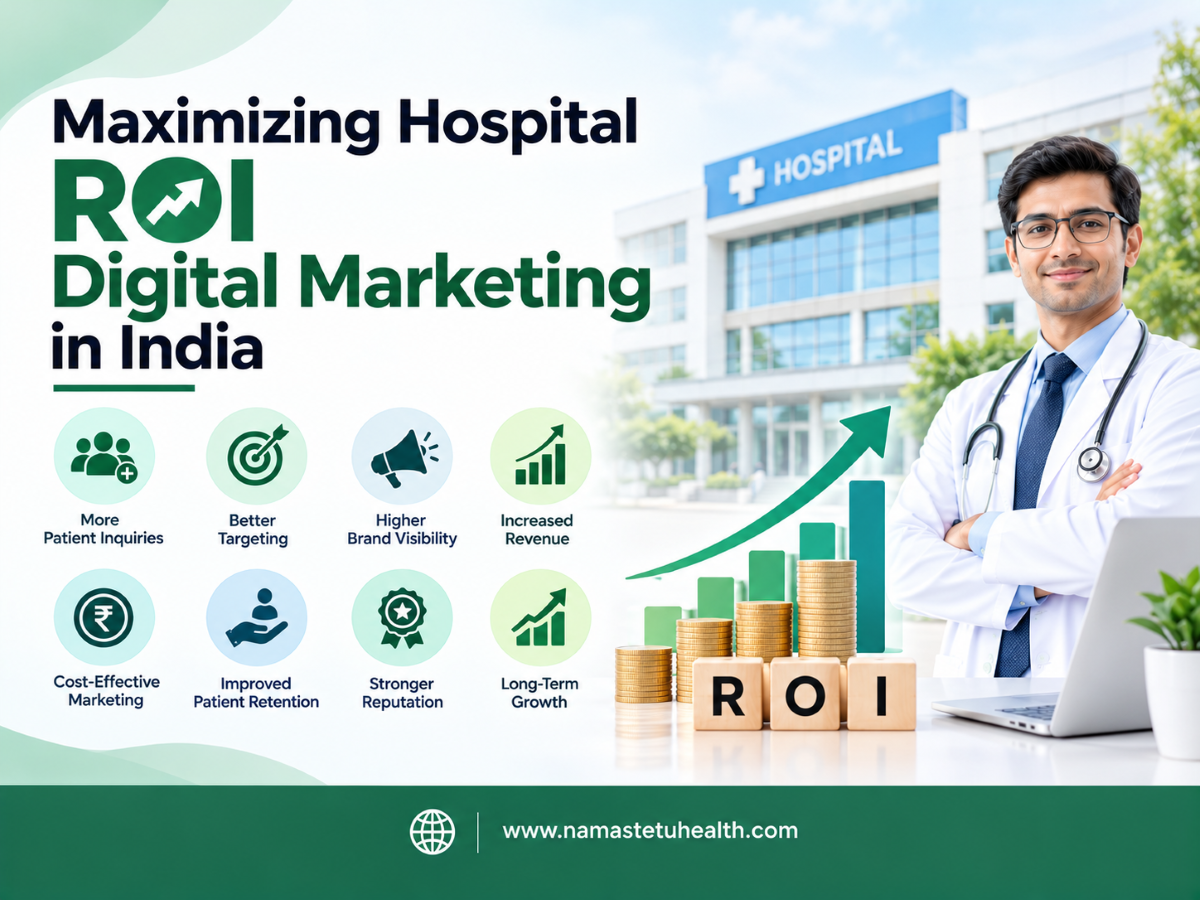
Maximizing hospital ROI digital marketing in India means getting more treated patients for every rupee spent. To do this, track each enquiry from first contact to treatment, put budget behind services with free capacity and a low cost per treated patient, and fix leaks in the booking path before adding spend. Namastetu Health helps hospitals do this through tracking setup, search-friendly department pages, booking-focused websites, social media, and paid ads, all measured by cost per treated patient. India adds its own factors, such as mobile-first search, WhatsApp enquiries, Hindi and English searches, and early questions about cost and insurance, which is why digital marketing in healthcare for hospitals needs a plan built for Indian patients.
Hospital ROI Digital Marketing: The Short Answer
In hospital ROI digital marketing, ROI is the revenue from patients who came through marketing, minus marketing cost, divided by marketing cost. A result of 3 means the net gain was three times the amount spent. Measure it at the treated patient, not at the click, because many hospital patients start with a call or message.
Why Hospital Marketing Is Harder to Measure Than Clinic Marketing
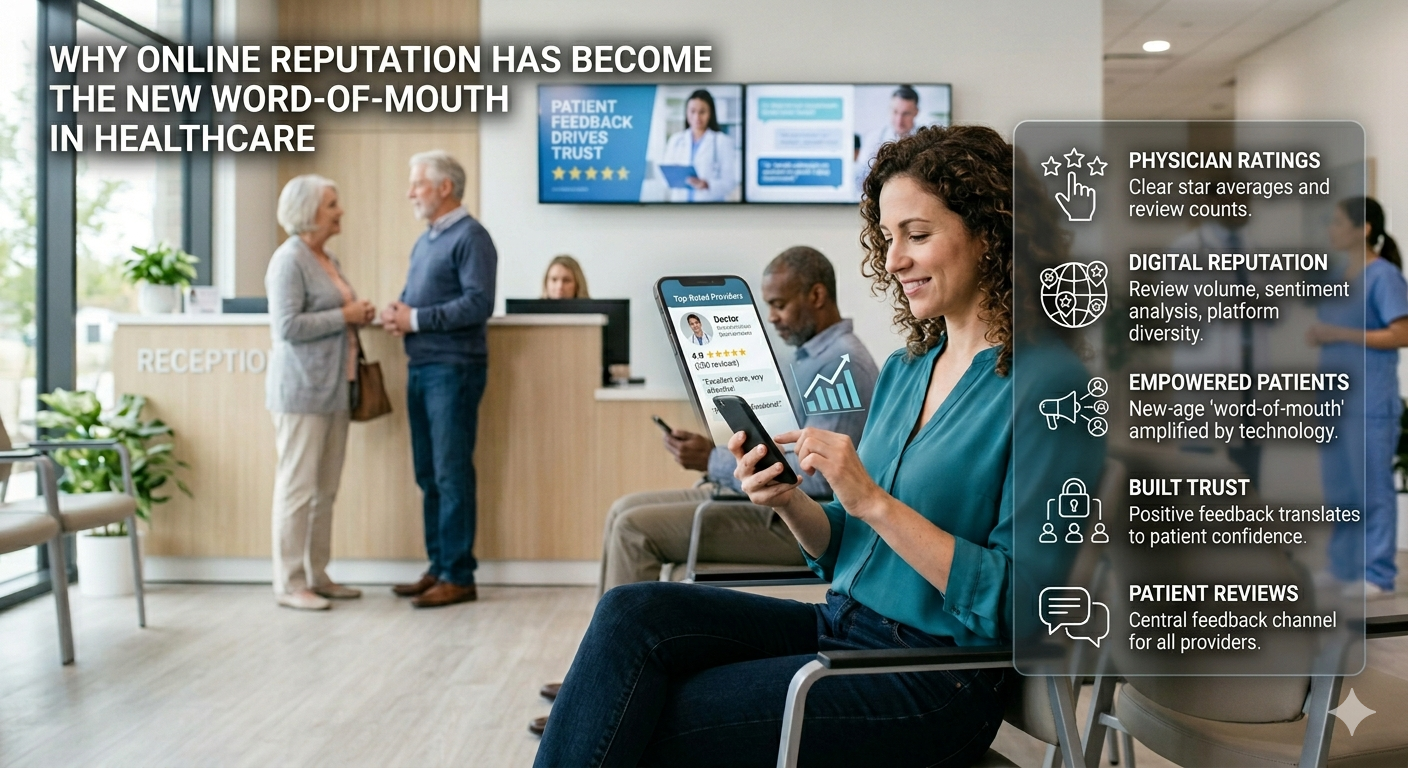
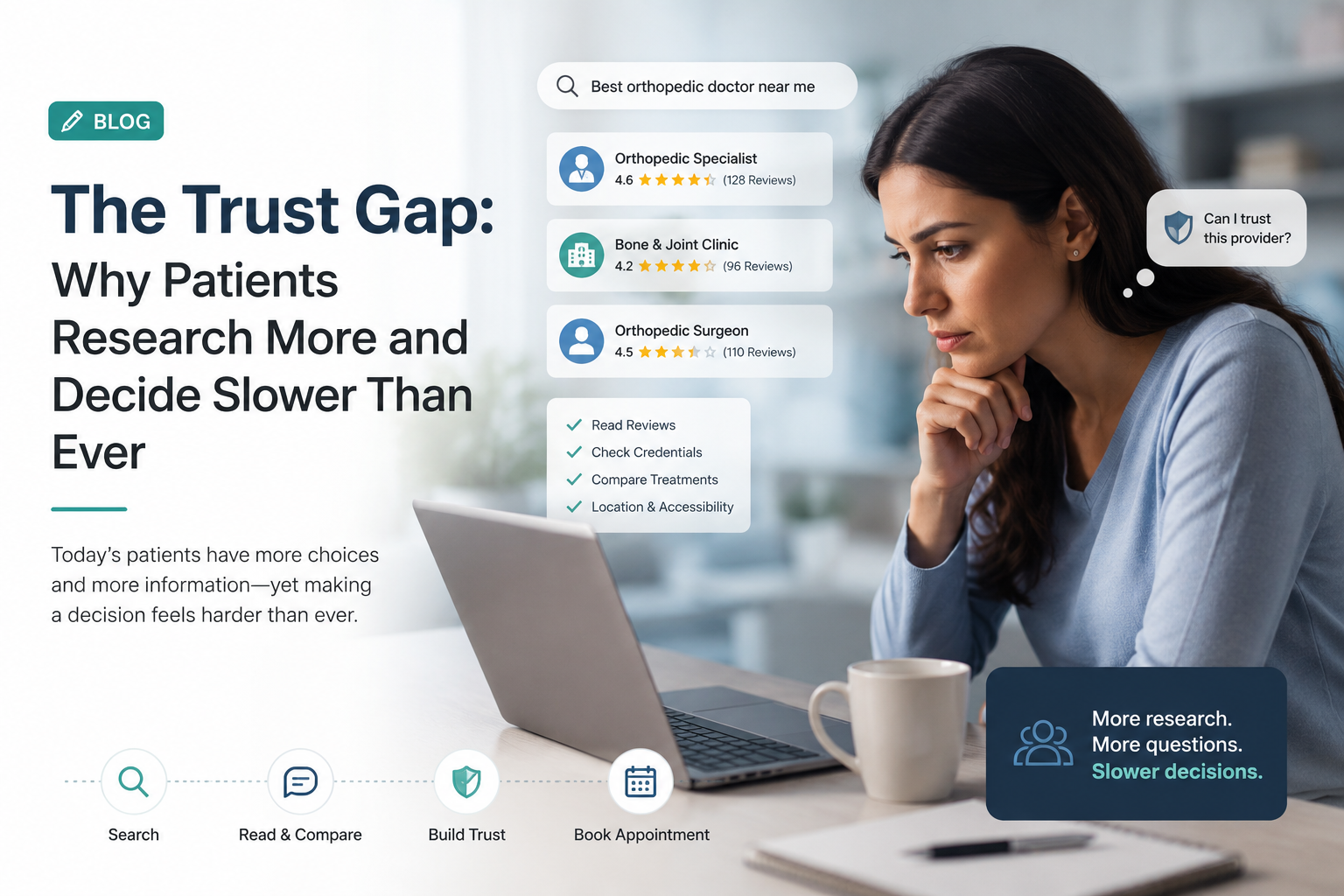
Hospital decisions are slower, larger, and shared by families, so a click or a form fill rarely shows the full result. A patient may watch a video, read reviews, call, visit weeks later, and start treatment after a second opinion.
Many of these steps happen by phone, WhatsApp, or walk-in, where no website tool can see them. Measure results at the treated patient, not at the click, or the numbers will understate what marketing is doing.
The ROI Formula and the Numbers That Feed It
ROI equals revenue from marketing-sourced patients minus marketing spend, divided by marketing spend. Revenue should include repeat visits and follow-up treatment, since one patient often returns.
| Metric | How to Calculate | What It Tells You |
| Cost per enquiry | Spend divided by enquiries | Whether ads and pages attract interest |
| Cost per booked consultation | Spend divided by booked consultations | Whether enquiries turn into bookings |
| Attendance rate | Patients who came divided by patients booked | Whether reminders and booking work |
| Treatment rate | Patients who start treatment divided by consultations | Whether the right patients arrive |
| Cost per treated patient | Spend divided by patients who start treatment | The number that links spend to revenue |
Set Up Tracking Before You Spend More
Give every channel its own phone number and tracking link, and have the front desk record how each enquiry started. Without this, you cannot tell which channel deserves more budget.
- Use a separate number for ads, the website, and the Google listing.
- Use a pre-filled WhatsApp message that names the page the patient came from.
- Add a “how did you hear about us” field to the appointment record.
- Record the outcome of each enquiry: booked, attended, started treatment, or lost.
Choose Services by Value per Patient, Not by Search Volume
Promote services that have free capacity and good value over time, not simply the ones people search for most. A service that is already full gains little from more enquiries.
Check four things for each service: free doctor and theatre capacity, revenue per patient including follow-ups, repeat or referral value, and how crowded the competition is nearby. In hospital ROI digital marketing, a high-value service with free capacity usually earns more from marketing than a popular service that is already booked out.
Hospital ROI Digital Marketing in India: Local Realities That Change the Plan
Mobile-first search, WhatsApp, local languages, price questions, and strong local competition shape how returns look in India. Plans copied from other countries often miss these.
- Many patients search in Hindi, English, or a mix of both.
- Patients ask early about cost, insurance, and cashless treatment.
- Many prefer a call or WhatsApp message to filling in a form.
- In smaller cities, patients often travel for care, so nearby-district pages help.
- Emergency services and planned procedures need different pages and different ads.
Search Visibility That Keeps Paying Back
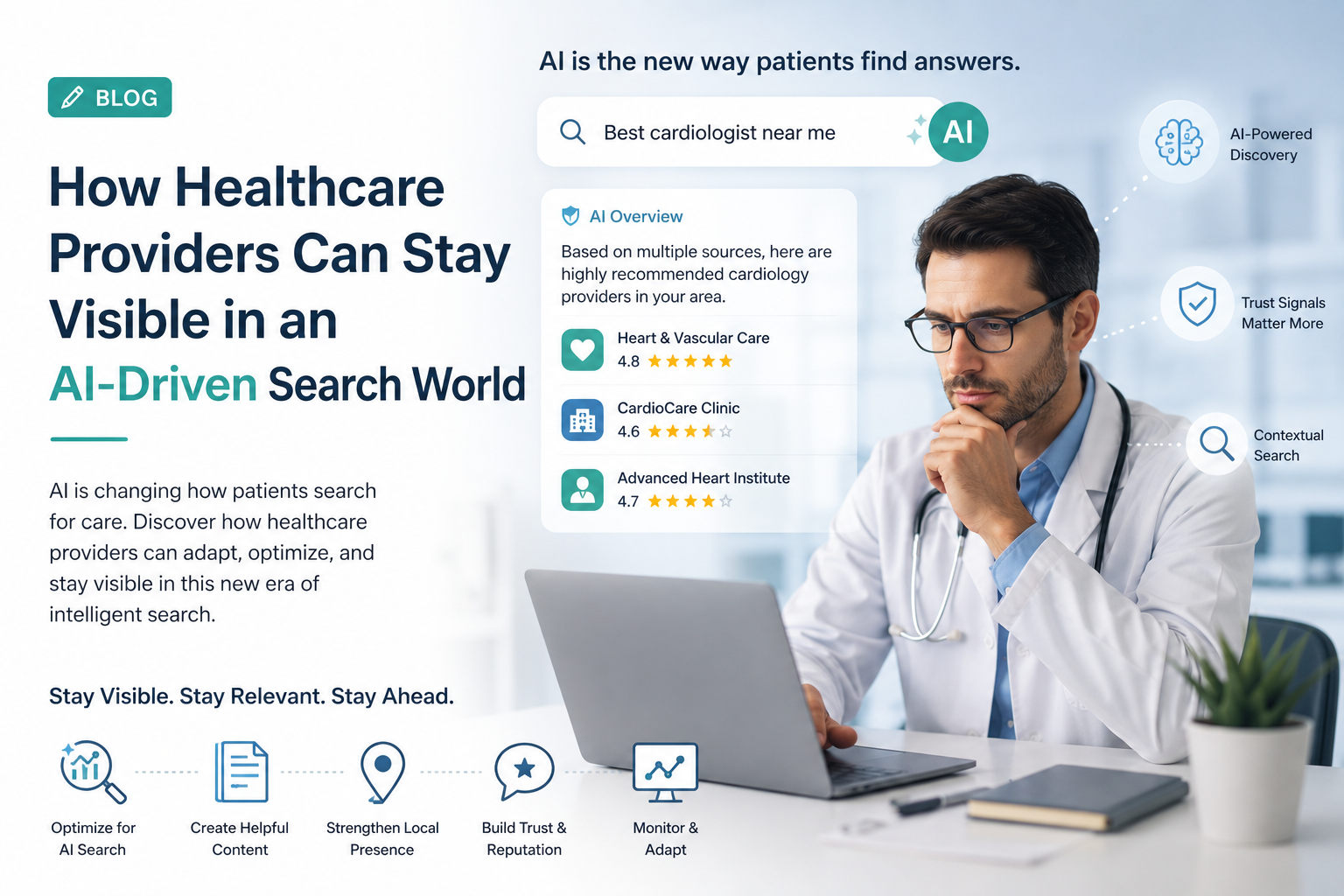
Search brings patients who already want care, and pages that rank keep working without a cost per click. Hospitals should build one page for each department and major procedure before anything else.
Practical healthcare seo services also cover doctor profiles, an insurance and cashless information page, answers to common patient questions, and an accurate Google listing for each branch. Each of these answers a question patients ask before they book.
A Website Built to Turn Visits Into Bookings
Most ROI leaks happen on the website: slow pages, hidden phone numbers, and long forms that lose patients who were ready to book. Fix these before increasing ad spend.
The best healthcare website design for a hospital is not the most decorative one, but the one that lets a patient find the right doctor and book in a few taps. That means a visible call or WhatsApp button, short forms, clear doctor availability, and one page per department.
Social Media for Trust Before High-Value Decisions
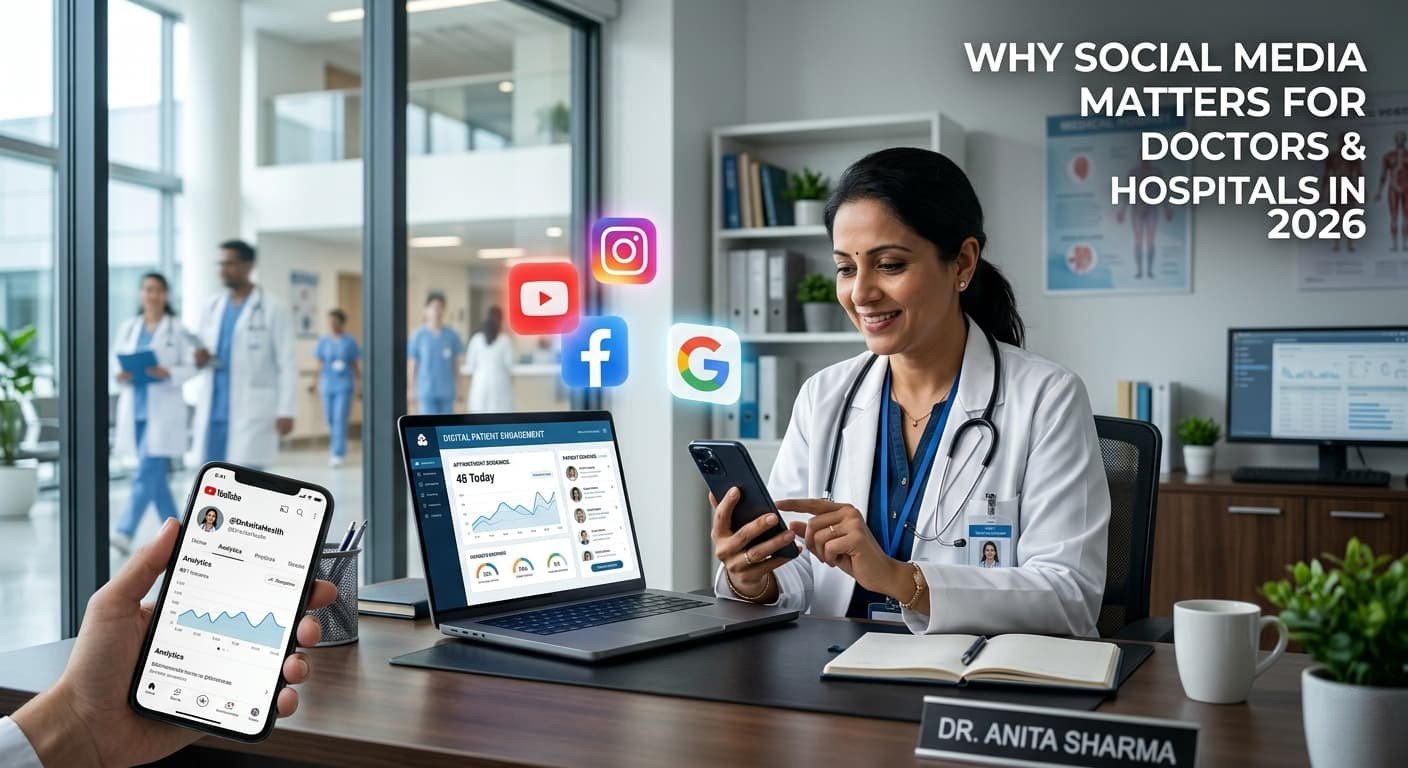
For planned procedures, social content helps patients ask fewer fearful questions before the consultation. Doctor-led videos explaining how a procedure works, what recovery looks like, and when to call work better than promotional posts.
Consistent healthcare social media marketing also keeps the hospital familiar to families who are not ready to book yet. Get written consent before showing any patient, and avoid before and after claims.
Put Paid Budget Behind What Already Converts
Add paid ads to services that already turn consultations into treatment and have free capacity. Keep a daily cap, send each click to the matching service page, and track calls.
Pause any campaign whose cost per treated patient stays above the limit you set from the formula. Google also applies stricter rules to healthcare ads, so wording and landing pages must follow them.
Fix the Leaks Between Enquiry and Treatment
Every leak multiplies the cost of each treated patient, so fixing leaks often raises ROI faster than adding budget.
- Call back every missed call the same day.
- Reply to WhatsApp messages quickly, even if only to confirm receipt.
- Send a confirmation and a reminder for every booked consultation.
- Follow up, with consent, with patients who consulted but did not proceed.
Keep Advertising Rules and Patient Data in the Plan
Check your medical council’s advertising rules and each platform’s health ad policies before publishing. Rules differ and change, so confirm the current guidelines.
Handle patient contact details carefully under India’s data protection law, and use them only for purposes the patient agreed to.
Questions Hospital Administrators Ask About Marketing ROI
1. What is a good ROI for hospital digital marketing?
There is no universal figure. Compare the cost per treated patient with the revenue that patient brings, and aim to improve it steadily.
2. How do we track patients who call or walk in?
Use separate phone numbers for each channel, ask every patient how they heard about you, and record it in the appointment system.
3. Why is cost per click not enough to judge ROI?
A cheap click may never become a treated patient. Judge campaigns by cost per treated patient instead.
4. Which channel gives the best ROI for a hospital?
It depends on the service. Search often has the lowest ongoing cost, while ads are faster, so compare channels using the same formula.
5. Can a mid-size hospital compete with larger chains online?
Yes, by focusing on a few services with free capacity, building clear pages for each, and keeping local details accurate.
Conclusion
Hospital marketing pays back when every rupee can be followed from the first enquiry to a treated patient. Maximizing hospital ROI digital marketing comes down to tracking, choosing services by value and capacity, and fixing leaks before adding budget. Hospitals looking for a digital healthcare marketing agency in Indore can ask for exactly this kind of tracking. Namastetu Health sets it up with hospitals before any budget is spent.
Contact Namastetu Health to build a tracking sheet that follows every enquiry from first contact to treated patient.