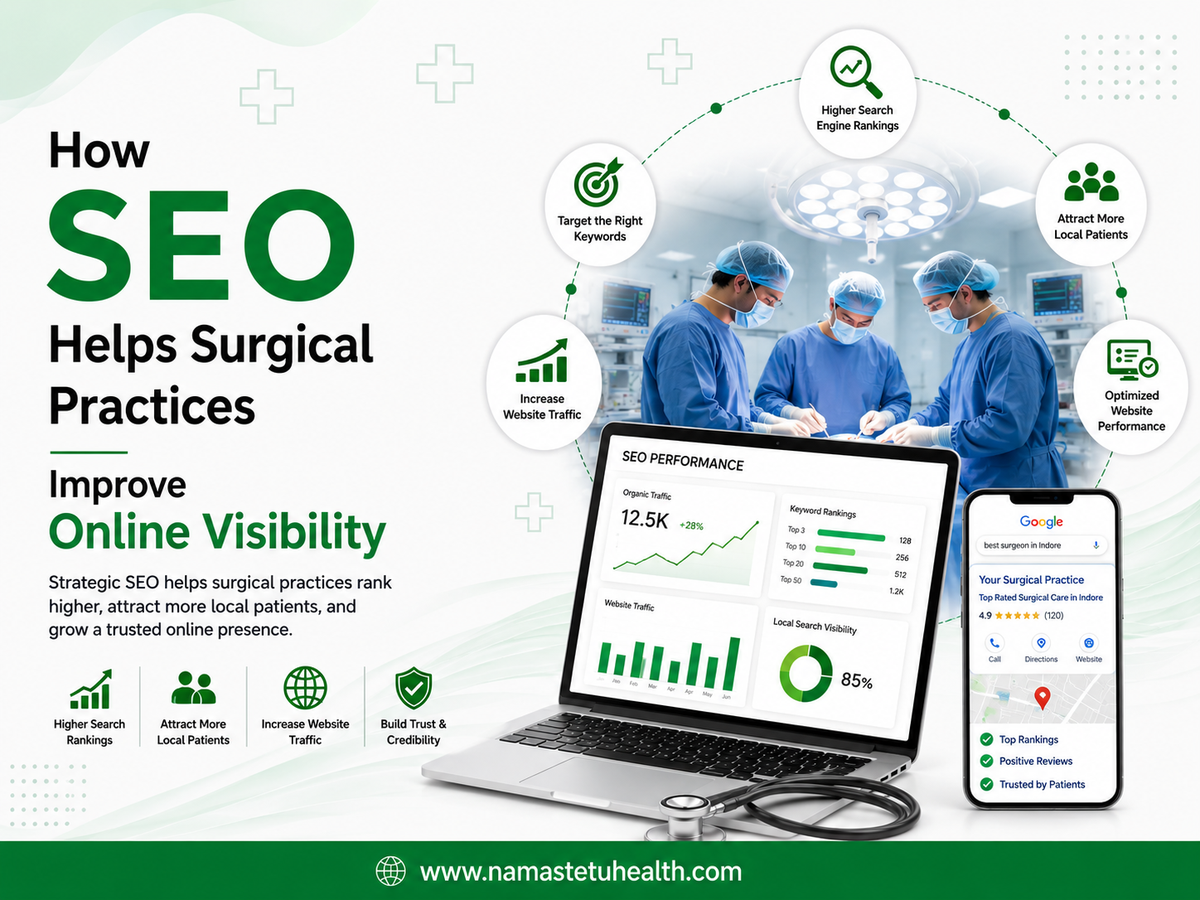
Choosing a surgeon is rarely a quick decision. Most patients spend weeks, sometimes months, reading credentials, comparing before-and-after cases, and checking reviews before they ever book a consultation. This is exactly where SEO helps surgical practices stand out, since it puts the right information in front of a patient at every stage of that long research window, not just at the final search.
Namastetu Health works with surgeons and surgical clinics who want their online presence to match the quality of their actual work. This guide covers what surgical SEO really involves, why it matters more here than in most other medical fields, and how a practice can start improving its visibility right away.
Why SEO Helps Surgical Practices Stand Out From Other Specialties
Surgery carries higher stakes, higher costs, and longer recovery timelines than most other healthcare decisions, so patients naturally research it more carefully. Industry data on surgical patients shows that over 70% research a procedure and surgeon online before ever booking a consultation, and a similar share read multiple reviews before making up their mind.
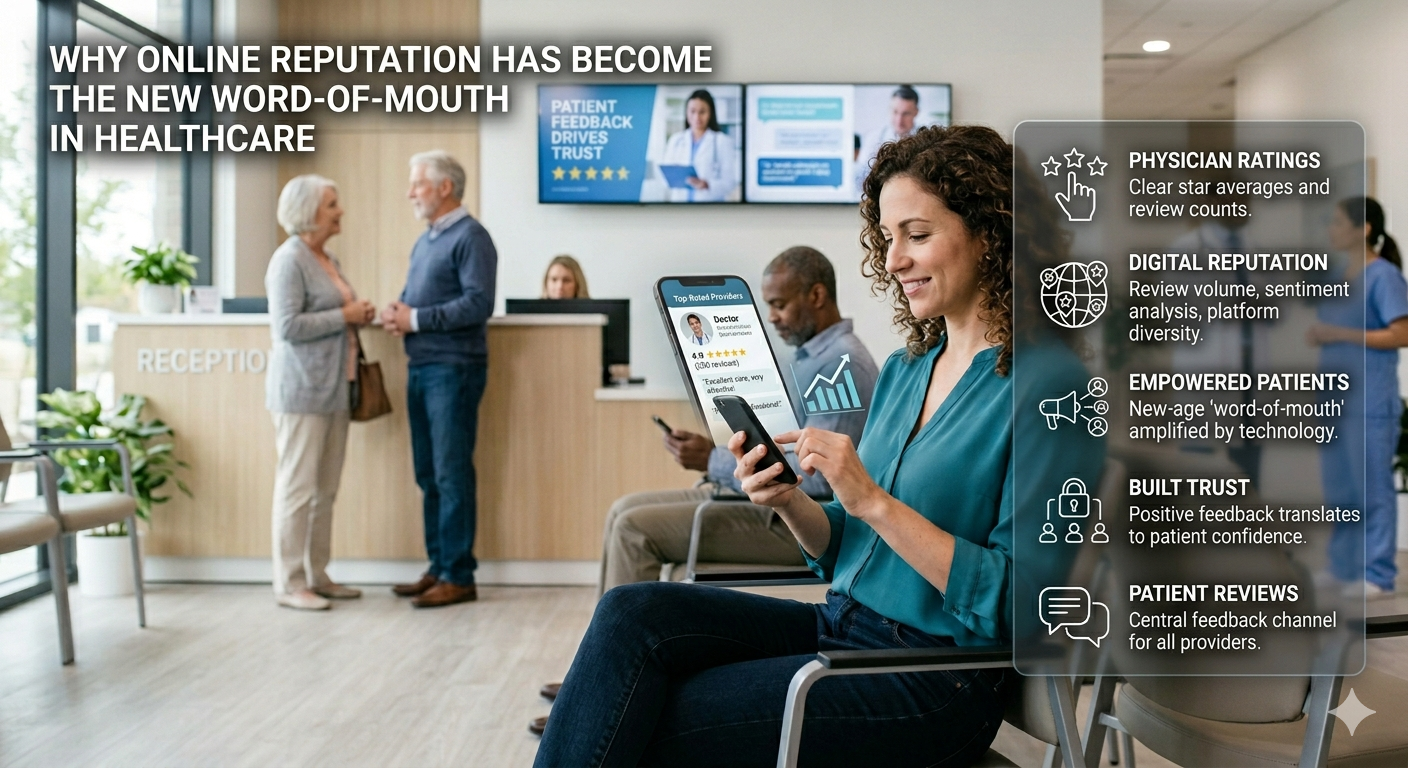
Trust plays an outsized role in this process too. Many patients say they trust online reviews about as much as a personal recommendation from someone they know, which means a handful of outdated or missing reviews can quietly cost a practice new consultations.
Newer research also points to a shift worth noting: patients increasingly arrive at consultations having already read AI-generated summaries about their procedure, alongside forum threads and social posts. A practice with clear, accurate content has a much better chance of shaping that first impression than one with a thin or outdated website.
Building the Foundation: Local Search and Google Business Profile
Local visibility is very important for surgical practices because most patients look for surgeons near their home. A complete and accurate Google Business Profile can help a practice appear in Google Search and Maps.
Here are some important things to focus on:
- Choose the correct surgical specialty as the primary category.
- Keep the same name, address, and phone number across the website and online directories.
- Add real photos of the clinic, operating rooms, and consultation areas.
- List all surgeries and procedures in simple language that patients commonly search for.
- Regularly post updates about new equipment, treatments, and patient education.
These basic steps are an important part of SEO Services for Surgical Practices and can help improve local visibility and attract more patients.
Creating Content That Matches the Patient Research Journey
A patient researching gallbladder surgery does not search the same way twice. Early on, they look for general information; later, they compare surgeons, recovery timelines, and costs; near the end, they look for reassurance before committing.
Content built for this journey usually falls into a few clear categories:
| Stage | Patient Intent | Example Content |
| Early research | Understand the condition or procedure | “What Is Laparoscopic Surgery and When Is It Needed?” |
| Comparison | Evaluate surgeons and options | “Recovery Time: Laparoscopic vs Open Surgery” |
| Decision | Confirm trust and next steps | “Meet Dr. [Name]: 15 Years in Laparoscopic Surgery” |
| Post-decision | Prepare for the procedure | “What to Expect Before and After Your Surgery” |
Answering these questions directly, in plain language, within the first few sentences of each page helps a website earn both search rankings and, increasingly, citations from AI tools like ChatGPT and Google AI Overviews.
Strengthening Trust Through Credentials and Reviews
Because surgical treatments involve real physical risks, Google follows stricter quality standards for this type of content. These standards are often called E-E-A-T, which stands for Experience, Expertise, Authoritativeness, and Trustworthiness. A surgical practice that does not build these trust signals may find it difficult to rank, even if it publishes a lot of content.
Building these trust signals usually involves a few important steps:
- Publishing detailed surgeon bios with qualifications, board certifications, and case experience where appropriate.
- Regularly asking patients for reviews after successful procedures and responding to every review.
- Using trusted medical sources when explaining risks, recovery, or treatment results.
- Clearly displaying accreditations, hospital affiliations, and safety certifications on the website.
- Research on surgical review platforms shows that patients may trust a surgeon with no reviews more than one with a single low rating. This makes getting regular, genuine reviews more important than simply trying to avoid negative feedback.
Any good Surgical Practice Marketing Agency should make this review strategy an important part of the SEO plan rather than treating it as a separate task for later.
Improving Site Speed and Mobile Experience
A patient who has just spent ten minutes reading about a procedure will not wait for a slow website to load before checking a surgeon’s credentials. Since most patients now search on their phones, website speed and mobile usability can directly affect how many visitors book a consultation.
The main technical improvements include:
- Keeping mobile page load time under three seconds whenever possible.
- Adding a clearly visible “Book a Consultation” or “Call Now” button on every page.
- Using secure HTTPS and keeping the website clean and free from unnecessary pop-ups.
- Making it easy to navigate between procedures, surgeon profiles, and contact information.
These improvements usually do not require a complete website rebuild. They are often quick wins identified during a detailed SEO for Surgical Practices in Indore audit.
Making the website easier and faster to use can help turn more visitors into patients. This is why many digital marketing services for surgeons start with a technical website audit before working on content or ads.
A Practical Way to Prioritize Your Next Steps
Rather than trying to fix everything at once, it helps to rank your practice against three simple questions, in order:
- Can patients find you at all? Check your rankings for your top three procedures plus your city.
- Do they trust what they find? Review your surgeon bios, credentials, and recent patient reviews honestly.
- Can they act on that trust easily? Time how long it takes to move from your homepage to a booked consultation.
Whichever question gives the weakest answer usually points to where the next round of SEO work should focus, whether that is content, credibility, or conversion.
Quick Checklist for Surgical Practice SEO
- Verify your Google Business Profile and keep it fully updated.
- Match your name, address, and phone number across every listing.
- Publish content for each stage of the patient research journey.
- Add schema markup identifying your practice and surgical specialties.
- Collect reviews consistently and respond to each one.
- Test your mobile site speed and remove unnecessary friction.
- Keep surgeon credentials and accreditations current and visible.
- Track rankings, traffic, and consultation bookings every month.
Frequently Asked Questions
1. How is SEO for a surgical practice different from general healthcare SEO?
Surgical decisions involve higher costs and longer patient research periods, so content, reviews, and trust signals need to be more detailed and address every stage of that decision, not just the first search.
2. How long before a surgical practice sees results from SEO?
Most practices notice measurable improvement within 3 to 6 months, though highly competitive specialties or cities can take longer to show significant ranking movement.
3. Do reviews really affect whether a patient chooses a surgeon?
Yes, and research suggests missing reviews can sometimes hurt a surgeon less than a single low one, which makes steady, genuine review collection more valuable than chasing a perfect score.
4. What kind of content works best for surgical practice websites?
Pages that follow the patient’s actual research journey, from explaining a condition to comparing procedures to introducing the surgeon, tend to perform better than generic service pages alone.
5. Can a smaller surgical practice compete with large hospital systems online?
Often yes, especially at the local level, since focused content, an optimized Google Business Profile, and genuine patient reviews can outperform a large hospital website that treats every surgeon the same.
Conclusion
A steady stream of new surgical consultations rarely comes from luck. It comes from being visible at the right moment, trustworthy once found, and easy to book once a decision is made, which is the exact combination that digital marketing for surgical practices should be built around. Small, consistent improvements to local listings, content, and site speed compound over time into a genuinely stronger online presence.
Ready to grow your surgical practice online? Book a free consultation with Namastetu Health today and discover simple, effective ways to improve your online visibility, attract more patients, and grow your practice.